Radio links Rattlechain

A big thank you to Nyrees and all the gang at Dark City Radio for allowing me the chance to waffle on about Geese, phosphorus and Rattlechain.

It’s difficult to get all the story into a few minutes, especially when going live, but I hope it was done some justice.

The show has now been archived and can be downloaded in case you missed it HERE.

Some links about themes raised

SAVE OUR SANDWELL CANADA GEESE WEBSITE.

LINK TO PETITION TO STOP SANDWELL COUNCIL KILLING BIRDS AND USE NON-LETHAL METHODS OF MANAGEMENT.

WHITE PHOSPHORUS.

AMOUNTS OF WHITE PHOSPHORUS CONTAMINATED MATERIAL DUMPED IN RATTLECHAIN UNDER LICENCE – OFFICIAL ENVIRONMENT AGENCY FIGURES.

scan0015

Will we ever get to the bottom of it?


Posted in Uncategorized | Comments Off on Radio links Rattlechain

Live on Dark City Radio

Just a quick plug that I will be on the permaculture show with Nyrees this Friday from 9.00pm on Dark City Radio. It’s an internet radio show so you will need to get on the website to listen in. The show has quite a wide range of themes around permaculture and environmental issues that affect us all. Hope to be talking about geese, phosphorus, and of course Rattlechain Lagoon…..

S3740006

The Good…..


scan0001

The Bad…..

And the ugly...

And The Ugly…….

DARK CITY RADIO.

Posted in Uncategorized | Comments Off on Live on Dark City Radio

Underground overground Womble in Oldb’ry

A former resident of Wimbledon has fallen on hard times. As a forerunner to David Cameron’s “big society” a London womble has been relocated to Sandwell for housing. Unfortunately what he was promised by the local authority traffickers did not appear to be quite what he expected. This is his story……

S3600010

A furry outcast refugee,

 Got off the train at Oldbury.

H2350004

Lost, confused  he needed aid

a home, some food- a job that paid.


As if by magic a fella appeared

His accent was a little weird.

“Hello ah kid, u want a place?”

said the rotund chubby face


“This is a great place to stay

you want a job, it will pay?”


The job flyer add was very clear  

“Litter champion wanted here”


Oh yes sir thank you very much

I have experience in such.”


“Well this is where you as to crash

in return for pickin up trash.”

S3870001


A dotted map guided our champ

to where he was to work and camp.


The womble pondered on his way

of the street where he was to stay.


“Nelson”- a name of mystery

An admiral or African history?

S3600001

Turning the corner he dropped the map

On seeing the giant load of crap


H1370021


S3600002

 What a shocker for our guy,

to see a mound , a rotting sty.

Weeds, flies, tyres and bricks

needles and used coverings for pricks.

S3600004

Tonnes and tonnes of industrial spoil

window frames and piles of soil

S3600014

The notices were strange to see

amongst the stinking debris


“In this place I cannot exist

I’ve been conned, swindled- pissed!”


S3600011

Tired and worn he’d lost the plot

he took his scarf and tied a knot


S3600015

A womble’s tale ends right there

But are you bothered , do you care?


Others live within this hell

they live in shit, it’s called  “Sandwell.”

11701177_388652531342017_2411176967596380258_n

Posted in Uncategorized | Comments Off on Underground overground Womble in Oldb’ry

Pictures from the past

“New” Dudley Port canal breach 1899 picture comes to light!

scan0009

There are several pictures of one of Tipton’s most infamous canal legends- the breach of the canal at the site of the Rattlechain Brickworks on September 9th 1899. I believe that this one has not been previously published in any local history book. Please note I am not giving a free pass to anyone to do so, which is why I have chosen to put the website logo over the top. It offers a view from the other side of the breach, actually in what appears to be the pit itself, perhaps from a boat?

On seeing this for the first time after coming into my possession, I at first questioned the authenticity, given both its stark clarity and crisp egg albumen character. But I believe it to be genuine and not a reproduction- it is a real photograph from the time. The figures standing on the emptied canal on either side, appear to match the onlookers seen in other postcards. The upturned boat mentioned to have disappeared into the pit is visible in the centre of the shot, as are the old telegraph poles along the section of the railway line. One can also see smouldering from the embankment which is curious, but can now be explained by further information that has come to light.

Evidential information concerning the depths of the marl pit as it then stood at the time of the breach support the claim that the pit was “100 yards deep”, and not as Rhodia tried to claim when constructing their cover up work reports a few years ago “100 foot deep”. This narrative I believe is one which attempts to deny what happened during the war years and what was buried there at this point. There is a major difference in the two depths, and they cannot both be right.


The Godfrey 1902 map contains the following information.

scan0016

Another source that I have recently discovered comes from the book Staffordshire by Vivien Bird, and there is a fairly detailed account of the canal burst there.

“Tipton has been described as the ‘Venice Of the Black Country’, and there are still a few oldsters to whom the ‘ninth of the ninth, ninety-nine’ has a significance almost equal to the ‘eleventh hour of the eleventh day of the eleventh month’ in 1918. On 9 September 1899 Barnett’s breach occurred early on a Saturday morning when 100 yards of canal towpath caved in and the canal began emptying itself through a chasm into the pit. Two iron-boats, full of ashes, were swept through the gap and hurtled down with the torrent. They belonged to Samuel Barnett, whose Rattlechain and Stour Valley brickworks obtained their clay from the marlpit, in which the water rose rapidly as it poured from the canal. Another boat began to race for the breach and only by jumping ashore and cutting the towrope was the boatman able to save himself and the horse. Another , near Dudley Port Station, accelerated its pace to overtake its horse, which followed willy-nilly at an increasing canter, and again the boatman scrambled ashore to arrest the boat’s headlong career by securing rope round a telegraph pole.

The marlhole, 100 yards deep and having a surface boundary of three acres, was quickly filled to the brim. Soon two miles of canal were drained, while six more miles lay muddy and lowered in depth. Locks were eventually closed above and below the breach. In Netherton Tunnel the level was lowered considerably and traffic on 40 miles of canal had to be diverted through the older Dudley Tunnel. Telegraphic communications between Dudley and Birmingham was impeded through the poles being swept away. Damage to canal property was estimated up to £50,000 while the catastrophe cost Mr Barnett about £3,000.”  

This account is possibly informed from a publication of the time called “The Engineer” . A remarkable report of the event is given on page  294 of the September 22nd 1899 edition which also describes how ashes were piled onto the canalside embankment, thus making it highly unstable. This explains the smoke effects in the postcards and the pictures. Together with heavy rain this would undoubtedly have caused a serious failure of the slope. This gives real depth to the events of that day and is easily the most graphic account which I have yet come across. The aftermath of the breach and operation which took place following it are also an important primary source of information. That the article in a respected magazine of the day states that the pit is “100 yards deep” I think should lay to rest the nonsense concerning the shallower depths which only appear to have surfaced during the Albright and Wilson late 20th Century ownership.


“FAILURE OF CANAL BANK.

One of those mishaps to which even the best engineering structures are occasionally liable occurred at four o’clock in the morning on the 9th inst. at Dudley Port, where a canal embankment gave way, occasioning considerable damage, but happily no loss of life. The accident happened on the main waterway, known as the Stour Valley low level, belonging to the Birmingham Canal Company, at a point about midway between Dudley Port and Albion railway stations. The main line of the London and North-Western Railway to Birmingham runs almost parallel with this section of the canal for a considerable distance on the opposite side to that on which the embankment collapsed, and in the immediate vicinity there are several extensive arms of the canal constructed for the use of manufacturers. Close to the scene of the occurrence is Mr. Barnett’s Rattle Chain and Stour Valley Brickworks, which obtain a large proportion of their supply of clay from a marl pit directly opposite to where the canal embankment gave way. Only the towing path intervened between the side of the canal and the edge of the clay pit, and it was at this point that the failure started.

 The gap rapidly increased in size till it was some 100 yards long, and about 80 yards wide, and through it was practically emptied the contents of some six miles length of the canal, including the arms affected. The marl-hole, although, 100 yards deep, and having a surface boundary of about  three acres, was quickly filled to the brim, whilst nearly two  acres of surrounding meadows were also submerged. The torrent swept everything before it, carrying with it thousands of tons of material, washing away the bed of the canal in the vicinity of the breach to a depth of many yards, damaging the towpath on both sides of the canal for a considerable distance on each side of the gap. All along the drained portion of the canal lay boats stranded, some being completely overturned. One boat, fortunately having no occupants, was bent double.

 Some damage was sustained by a section of the permanent way of the adjoining railway, one line being rendered useless for a time  owing to the water washing under the metals and destroying the ballast, whilst both lines were for a short time rendered useless, the traffic during this temporary stoppage being conducted over the Grand Junction line. Under the direction of Mr. Entwistle, district superintendent, the work of repairing the damage was speedily commenced, and before long, one of the lines was in a condition to allow the passage of trains without much danger. Telegraph Wires and posts near the scene of the disaster were thrown down owing to the fissures made in the towpath and the rush of water, and throughout the day telegraphic communication between Dudley and Birmingham was considerably impeded.  The officials and men of the canal company got to work as soon as possible, and made strenuous efforts to mitigate the misfortune.

On the arrival of one of the inspectors and a gang of men, steps were at once taken to prevent the canals being drained from further levels. The locks at Ryder’s Green, a mile towards Birmingham, were closed, and so were those above the breach near Dudley Port station, and the flow of water in the main canal was stopped within about two hours and a-half after the outbreak was first observed. Planks were also put across the openings of the arms of the canal, a large quantity of water being impounded in this way. In addition to two miles of the main canal being completely drained, the water in the Netherton tunnel and other branches of the canal was considerably lowered. The canal is about 24ft. wide and 6ft. deep, and· the length of the “low level,” as it is termed, is between thirty and forty miles. A rough estimate places the cost of repairing the whole of the damage at between £40,000 and £50,000; but this is not to be taken as official. It is expected that in a few weeks’ time the gap will be filled up so as to allow of the reconstruction of the canal and of the rebuilding of a firm embankment. With regard to the cause of the mishap, there are various versions extant, and one is that the embankment had been weakened by the blasting operations in the marlpit, which were going on till about a month or so ago, and that ashes have also been tipped on the banks, and these smouldering day by day, helped to loosen the tenacity of the puddle dam of clay which, with a thickness of 3ft., runs along the whole length of the level. Some heavy rainstorms had also occurred not long before the accident, and it is thought that this may perhaps have helped to contribute towards the giving way of the embankment.

On the day after the disaster about fifty men, under the direction of Mr. Nias, assistant engineer, were engaged constructing grooves for stop-planks to enable the working of the locks, above and below the destroyed embankment. By the afternoon a stank was completed at the Dunkirk Stop, about a quarter of a mile on the Birmingham side of the breach, so as to enable the working of the Brades Hall locks and open up traffic on to the Wolverhampton level. The men were afterwards chiefly occupied in putting in a set of stop-planks in the direction of Dudley Port Station, underneath a bridge, about a quarter of a mile on the other side of the chasm, to enable the filling of the Tipton section of the main canal. A stoppage was also constructed at the mouth of the section of the canal leading to Netherton tunnel, and water was let in up to almost the normal depth, allowing of the passage of the company’s boats conveying the material and implements required for the operations the in progress.

The traffic in the Netherton Tunnel section has been resumed, and boats are thus able to get to Wolverhampton and Birmingham via Tipton. The filling of the canal of the main level at the points indicated will allow of the passage of boats to all the works affected by the disaster, with the exception of Mr Barnett’s brickworks.

The Irish mail from Birmingham passed by the scene of the accident just after the water burst through the embankment, and at Dudley Port the engine-driver informed the station officials of what he had observed. A disaster of a very similar character occurred at Deepfields resulting in damage to property amounting to several thousands of pounds, the suspension of work at important iron and steel manufacturing industries employing about 2000 hands, and the stoppage of a large amount of traffic. The havoc wrought on that occasion was brought about by the collapse of a portion of embankment of the canal from Birmingham to Wolverhapmton, and, as in the case of the Dudley Port disaster, the water rushed through the gap into a huge clay-hole owned by Sir Alfred Hickman, creating a chasm twenty yards wide. Satisfaction is being expressed in the district at the energetic manner in which the engineering staff of the Canal Company is coping with the difficulty.

Several views of the gap and canal are given on page 295. Fig. 1 is looking towards Albion, and was  taken from the towing path. The London and North Western railway is seen on one side, and the brickfields and burning bank on the other. Fig. 2 is also taken from the towing path, but looking towards Dudley Port. Fig. 3 shows the railway embankment, and the broken siding. Fig. 4. is taken from the centre of the gap at the bottom looking towards Dudley Port. Our engravings are from  photographs by Mr. T. Lewis, Stratford-road, Birmingham.”

The pictures included in the report are shown below. I have scanned an original version of the magazine and also each picture in turn to show as much detail as possible.

Scan_20150908

S3700003


S3700004


S3700005


S3700006

Some constants of time remain which allows one to stand in the shadow of this event over a century later. The mainline Birmingham canal, railway line and Toll end works bridge looking towards Dudley Port have not grown legs, even though the use of the brickwork pit has obviously been of changing nature.

S3680001

View looking towards “Albion” from Birmingham canal at dawn. The brickworks have gone in the distance and greenery has replaced the ash. Pylons take the place of telegraph lines.


S3680002

View looking towards Dudley Port. The Toll End works bridge remains as does the railway line. The breach has been repaired from the towpath.


The Engineer article strengthens my opinion that Samuel Barnett was a rogue and conman who made great fortune out of an industry which was profitable at the time but gave little respect for the environment it scarred. He was after all a civic businessman who was  a member of Tipton Urban District Council 1895-1901. There are many websites and local history groups who are what I would term ‘industrial history cocksuckers.’ I’m not apologising for the crudity of expression because eulogising industrialists who could  influence events to their favour by buying it is not in my vocabulary. Making saints out of such people and naming streets after them appears to be another 20th Century phenomenon usually if there is a book to sell or a hidden agenda to promote.

Barnett met his fate at the age of 64 after reportedly falling from a bolting horse on the cart that he was riding in Tividale near The boat pub. His one arm handicap may well explain and have played a part in the accident, but the irony of the demise in context with the imagery of the boat and horse being swallowed up by his breached pit in the accounts above cannot be ignored. Maybe somewhere in Tividale a crater to hell had been dug out by his brickmaking empire and delivered a poetic repose.

S3700001

A street in Tipton which belies a dark name from history

He left behind him close to £60,000 to William and Thomas Barnett, presumably his sons and solicitor Frank Dawes.

dead barnett

The aftermath of the crater he dug out becoming a repository for chemical and military waste only compounds the manner in which others that followed him have also usurped this area for personal gain. It is almost like Tolkien’s ring of power but one forged of clay. How fitting that the devil’s element found a home and grave there amongst the ashes of industrialism.

Posted in Uncategorized | Comments Off on Pictures from the past

Tom’s bomb

S3600023


There was a boy whose name was Tom,
Who made a high explosive bomb,
By mixing up some iodine
With sugar, flour and plasticine
Then, just to make it smell more queer
He added Daddy’s home-made beer.
He took it off to school one day
And when they all went out to play,
He left it by the radiator
As the heat was getting greater
The mixture in the bomb grew thick
And very soon it seemed to tick
Miss Knight came in and gazed with awe
To see the bomb upon the floor
“Dear me”, she said “it is a bomb,
An object worth escaping from”
She went to Mr Holliday
And said in tones that were not gay,
“Headmaster, this is not much fun
There is a bomb in classroom one!”
“Great snakes” said he, and gave a cough
And said, “I hope it won’t go off!
But on the off chance that it does
I think we’d better call the Fuzz”
A policeman came and said, “Oh, God,
We need the bomb disposal squad
Some firemen and a doctor too,
A helicopter and its crew
And, since I’m shaking in the legs
A cup of tea and hard boiled eggs!”
A bomb disposal engineer
Said, with every sign of fear,
“I’ve not seen one like that before,”
And rushed out, screaming, through the door.
Everyone became more worried
Till Tom, who seemed to be unflurried
Asked what was all the fuss about?
“I’ll pick it up and take it out.”
He tipped the contents down the drain
And peace and quiet reigned again
Tom just smiled and shook his head
And quietly to himself he said:
“Excitement’s what these people seek,
I’ll bring another one next week!”

David Hornsby

scan0037

Posted in Uncategorized | Comments Off on Tom’s bomb

The Tramp Phosphorus rejuvenated


In this blog, we revealed how we had spotted the elusive John’s Lane resident in his unnatural habitat, evading the eye of his landlord, Rhodia Limited. He was extremely irritable and choleric on that occasion on account that the chemicalsters had wanted to evict him from the site, (or at least bury him under the water), but since our last visit it appears that he has become more chilled out with life…..

Scan_20150819 (2)

“The Tramp Phosphorus” at Rattlechain Lagoon

Q. Willam Peter, How are you?

A. Oh I’m enjoying life down at the chain at the moment. The sun is shining and the water is lukewarm.

Q. So what have you been up to since we last met?

A I’ve become politically active. I’ve joined a union of tramp chemicals- The Chemical Union Network of Tramps. Our General secretary Bob McCyanide has reinvigorated my juices, and now together with my other toxic brothers and sisters we intend to campaign for change!

Q. And what change would that be?

A. A change in attitude young man. As Bob says, “Willy Peter, it was not your fault when other tramp phosphorus was dropped on people in Gaza or Iraq. People should not be so easily burnable and try living in underwater communities like yourself- then they would not have been injured.” The media are so insensitive to us chemical tramps- I’m not a “chemical weapon”, I’m a chemical being!

Q That sounds pretty warped thinking to me.

A. Not at all dear boy Secretary McCyanide is right. They had some problems down Trinity Street a few years ago with tramp phosphine taking to the air in a hot air balloon. Rhodia say that “no one was injured”. People were taken to hospital, but “no one was injured”. It’s all about the spin you see, just like politicians. I’ve become a bit of a political animal myself and I’m backing the party of fire. It has to be Jeremy for leader. I’m told I could become a celebrity lookalike, but I might have to find a suit to put on. Yes, I’m thrilled that I along with other affiliated members, all of us  in C.U.N.T  together have a voice in todays Labour movement.  

Scan_20150819 (3)

I might even see if I can get onto the local shortlist to become a councillor in Sandwell.

Q Er… Well best of luck with that one I’m sure they are well acquainted with your union. Would you reintroduce Clause Four?

A Oh yes, but I would rename it Clause P4 after yours truly. I am a stakeholder at Rattlechain, because I am polluting it after all.

  Q So have you been having any trouble with the gulls lately, on account of the horror stories around the country concerning attacks?

A     No I can’t say they trouble me at all. I throw them a few crumbs from time to time, it’s nice to have the company, now all those Belgian folks have gone.

Scan_20150820

I stand on the pier and look across the waters at them. I even had one land on my shoulder and start nibbling at me, but alas it died. I can’t think why?

Well thanks for sharing your thoughts with us again Tramp Phosphorus, I’m sure that we will see you again down the line. I’d offer to shake your hand , but I fear I might get burned.

Au revoir

WLBRL


Posted in Uncategorized | Comments Off on The Tramp Phosphorus rejuvenated

China in your hands

The recent major catastrophic explosion in the Chinese port of Tianjin is still being dealt with and will be investigated so we are told. What is clear is that numerous toxic chemicals appear to have been stored in one place at one time. The source of ignition may well be unknown but the  reality is that when chemicals are stored in this way in ever greater numbers then this is what will happen, despite any claims to the contrary by those seeking to increase exports at human and environmental cost.

China’s misfortune is that the Western consumer will happily buy cheaper electronic items than buy from within their own countries. I am personally aware of the increasing traffic from this country into Britain ordered with a few internet clicks, and this really just fuels the consumption of chemicals which are used in some of the processes to make electronic equipment. One also should consider the way in which people in emerging industrial manufacturing powerhouses are treated and are paid, and how they are more likely to be exposed to dangerous chemicals than those here. The initial loss of life may yet compare into insignificance with the long term threats of toxic chemicals entering the environment and the food chain.

But before being all smug that things like this do not happen over in “the land of the free” or over here, it is quite apparent that they do. The US Environmental Protection Agency has recently shown its incompetence at polluting a River in Colorado, with the effects of someone’s get rich quick industrial plan that never had any real plan to deal with the toxic waste which resulted. This is the true Satanic face of Capitalism.

H2060020

Some six years after a serious incident in Oldbury involving Rhodia’s Trinity street plant we are still awaiting to see what action the Health and Safety Executive are going to take. Perhaps we are not so different in covering things up concerning our own polluting chemical industries after all from China, but it helps from time to time to expose the masses by media pollution that there are other countries where things such as this will just never be released into the public domain whilst pretending that access to information here is more open and transparent.


Posted in Uncategorized | Comments Off on China in your hands

Smoke and mirrors


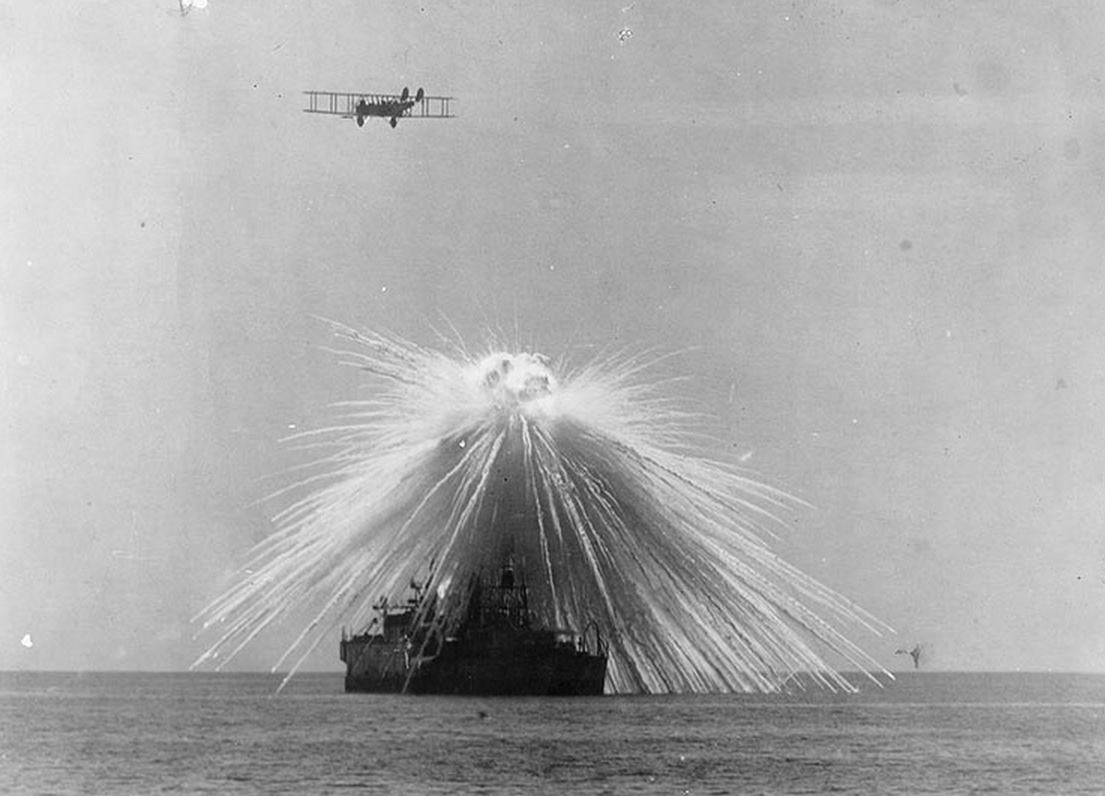
scan0004

We have looked previously how this deceptive element was used in World War one, particularly because of its smokescreen properties. By the start of World War Two its use had been perfected in the form of ballistic projectiles capable of causing much misery and destruction. Albright and Wilson of course added to this as the only UK producers of white phosphorus.

Two contrasting uses of white phosphorus illustrate just how the chemical gained notoriety in the military fields. What remained behind on the ground and surrounding waters can only be imagined. Just who decontaminates bombed territory after the ceasefires of war?

Rabaul is located in “New Britain”  an island of Papua New Guinea. Strategically it has been of vital importance as a naval operations centre in the South West Pacific, but has a bizarre history of volcanic eruption. Britain took control in World War one ousting the German led administration. After the baton passed to Australian control it was destroyed in a 1937 eruption.

The Japanese invaded in 1942 and it became the main base of their  military and naval activity in the South Pacific.

As a part of Operation Cartwheel, a joint  campaign by the US, Australian and New Zealand air forces in late 1943 initiated a sustained bombing operation against the airfields and port of Rabaul.

The picture above shows that white phosphorus was used in this operation scattering particles of burning white phosphorus across large areas of land. But the direct targets of the Japanese anti-aircraft gun emplacements are not directly hit. The smoke merely drifts across making visibility for what came after very difficult. Who knows how many tonnes of incendiary rained down on the area or what the environmental cost was to be- that’s just another of the casualties of war. In 1994 the area was again destroyed by fire in the form of another volcanic eruption. In one way or another the place must be doomed to being  a land of fire and smoke.

If the use of white phosphorus was considered justified in such bombing raids, one has to wonder what Operation Gamorrah was really about other than pure revenge on an industrial scale from above. The devastation of one city is summed up in “The shocking History of Phosphorus- A biography of the Devil’s element.”  by John Emsley. Some have put the death toll much higher.


scan0005

One can ponder at the mind boggling human suffering, but the zoo… one can only wonder what those poor trapped animals suffered during those raids. The victors do not write such histories, (perhaps “German animals” don’t matter), but choose to omit them when pontificating on “finest hours”. THIS WAS SURELY THE RAF’S WORST HOUR BY FAR, AND THAT GOES FOR THEIR COMMANDER IN CHIEF AS WELL. 

But hang on a minute, there’s no mention of the bombing of Hamburg in “100 years of phosphorus making”– the story of the first 100 years of Albright and Wilson by R.E Threlfall. They were as he and their latter day works managers and PR apologists like to point out “the U.K’s only phosphorus suppliers”.

S2920005

1943?

SO ALBRIGHT AND WILSON , A “PEACE” LOVING QUAKER FAMILY RUN FIRM CAN BE SEEN TO HAVE PLAYED A MAJOR PART IN THIS MASSACRE OF LIFE, AND OF COURSE IN 1942 THE RATTLECHAIN SITE WAS IN USE FOR EXPENDING THE HORRORS OF WAR INTO AN OLD ABANDONED CLAY PIT.

PUT THAT IN YOUR CLAY PIPES AND SMOKE IT LATTER DAY “PACIFISTS” AND DISARMAMENT CAMPAIGNERS.

“The only good thing that comes from war is the stimulation of scientific research, primarily with the object of killing human beings but incidentally in finding substitutes for age-old materials and methods.” R.E THRELFALL

Posted in Uncategorized | Comments Off on Smoke and mirrors

Mis-lead, chasing for the truth about Chasewater

This is a long post which covers a number of subject areas relevant to this website. Fundamentally it relates to investigating unexplained wildfowl illnesses and deaths which appear correlatively linked to certain sites, so much so that it is almost certain that the problem lies with something at that site.

This was certainly the case at Rattlechain, though the chemical in question there, white phosphorus, was extremely difficult to pin down, not least because the site operators were not honest about their waste practices and the waste regulators had not a bloody clue about much at all. It was also the case that the chemical could not be analysed by a standard laboratory due to its evanescent nature after birds had been retrieved for post mortem.

It was also necessary to firstly identify that this chemical was even present in the birds, which in the early days was not possible because we did not know enough. This changed with serendipity and contacting relevant experts in the field, which together with on site knowledge led to the site operators having to finally end the nonsense that they had been spinning for several years- that the site was a “haven for wildlife”, when all along they were fully aware that it contained tens of tonnes of a banned rat poison they and their predecessors had dumped there.

White phosphorus is an unusual and uncommon chemical for wildfowl to encounter, especially given that Rattlechain is probably unique in the UK, and probably similarly in Western Europe. But there are other major poisoners of wildfowl  which are far more common and have been studied extensively by scientists for many years. The main one involving swans is lead.

The source from which the birds are ingesting the material is highly controversial, but it is clear that a ban on certain mid range lead fishing weights reduced the number of fatalities. It does however remain a major cause of swan mortality and reason for wildfowl admission to rescue centres.

First of all a quick summary. In the mid 1970’s there was a major decline in the mute swan population in the UK. Major investigations revealed lead poisoning was to blame, and in particular the use of angler’s lead weights which could be easily ingested as birds foraged for food. A partial ban of these in 1987 removed the mid range of lead weights, though the upper and smaller dust shot sizes remained. Lead used in shooting remains in use.

The National Swan Convention, an umbrella group of swan rescue organisations in conjunction with the Environment Agency  set up a project to assess the impact of discarded and lost fishing tackle and lead in particular, on swans. In January 2002 this project produced its final Research & Development Report which confirmed that lead poisoning has re-emerged as a very significant problem. According to the NSC website, some groups have reported more than 35% of birds with blood lead levels greater than would render individuals poorly, and in the West Midlands it is well over 60%.

“The National Convention for the Welfare of Swan & Wildlife (now known as The National Swan Convention) is committed to establish the precise reason for this – what is the source of this lead? The obvious possibilities are:

  1. Angler’s lead shot deposited before the current ban in 1987
  2. Angler’s lead shot rendered illegal by the 1987 legislation
  3. Angler’s lead dust shot used legally
  4. Lead shot-gun shot”

Further information on how lead affects swans and other wildfowl can be read below, which was written by former MAFF veterinary pathologist Alan Hunt and his wife, who worked on lead poisoning extensively.

leadpoisoningA&VHUNT

Some areas are noted for high levels of birds affected. The West Midlands in general is such a “blackspot” area, and within these areas there are certain sites that are of note. One of them is Chasewater Country Park, located near Brownhills, Walsall. It is a major area of water and attracts a vast variety of wildlife and wildfowl including moulting swans. Formerly it appears to have had multiple transfer of ownership from Brownhills Urban council, Walsall council, Lichfield District Council and now Staffordshire County Council. This is important please note.

S3200025

The current managers

Having visited the site for a number of years both myself and other volunteers have from time to time noted noticeably ill birds, which when  taken into care have been confirmed to be suffering from lead poisoning based on high blood lead levels readings taken. This evidence is clear, independent and irrefutable. Some birds respond to treatment but many do not and it can depend on speed of early clinical signs being  recognised, which unfortunately many people are not aware of. The source however is not so easy to pin down- but it has to be a source from this site surely?

In the last few years the site has undergone major changes. Lichfield District council transferred the site to Staffordshire County Council in 2011. Serious flaws were found in the adjoining dam wall which needed to be repaired and the main lake was almost fully drained. At this point many of the wildfowl, particularly the swans transferred themselves to a smaller pool known as “the duck pool”. This was almost a shallow paddling pool with an island, and Lichfield District Council appeared to take interest in this during their tenure by installing ramps and nesting materials every year. It was also used for sailing model boats. Several domestic birds congregated with the other birds. It was a popular feeding spot for families.

For the period that the lake was drained and the swans took to the duck pond, there were few issues concerning lead poisoning. One could draw a conclusion therefore that they were not ingesting a source of lead from this shallow none fishing pool, and therefore that the issue was with the main lake.

S2660008

It’s not called “the duck pond” apparently- even though it says this on their own notice board!

Then enter Staffordshire County Council. Not long after they took over from Lichfield and the main lake had started to refill again, the duck pond was inexplicably drained. Notices went up stating that the water was contaminated and needed to be drained, CRUCIALLY IT WAS STATED THAT THE POOL WOULD BE REFILLED. NOTICES WERE PUT UP BY THE COUNCIL ON THE FENCED OFF AND DRAINED POOL.

S2270009

Bone dry- the empty duck pond

This was posted on the Chasewater country park Facebook page, and was identical to those stuck on the fencing. This quite clearly identifies this pond as “the duck pond”, and also states that the water is being removed to improve conditions for the birds. It is apparent here that the water would soon be refilled.

Screenshot_2015-07-17-23-35-17-1

The evicted wildfowl then headed back to the main lake. At the start of the year, and continuing now, several swans were noted to becoming ill again, with what I identified as clear lead poisoning symptoms. I am aware of at least 6 swans to date that have either been found dead or have died when picked up. Some of them have been confirmed to be suffering from lead poisoning, with the AHVLA also undertaking post mortems on some birds. The RSPCA have taken some birds to their Stapeley Grainge wildlife hospital in Cheshire.

S2270003

A lead poisoned swan at Chasewater’s main lake


S2270004

Another

So I raised the issue with the council. I asked questions about the duck pond and when it was going to be refilled, now many months after it had been drained given that the claim made in notices that the council had put up stated clearly that it would be soon refilled. The notices then disappeared, and in their place others appeared making claims about the history of the main lake.

S2270007

Another notice appeared in “the rangers rant” flyer at the site- shown below- where again claims about a 19th Century rifle range are made. scan0009 But is there any real evidence that this is the long lost source of lead? There does appear to be some historic rifle range in the area in question. This is shown in an nls Staffordshire map from 1883 below

. nls (5)

The next available map from 1903 does not show a range marked.

nls (6)

But I find this quite baffling indeed and probably unlikely. This council have allowed this pool to be drained where the birds were away from the source of contamination that for some reason no one had ever appeared to identify when the site was owned by Lichfield District Council. Indeed I do not possibly see how Staffordshire can identify the source of lead poisoning where as described above, this requires almost impossible science. PERHAPS THEY ARE CLAIRVOYANTS.

If you sense a feeling of anger rising, then you are very perceptive, because I always found Lichfield council to be very caring about the wildfowl, and ranger Jan Lee in particular spent a great deal of her time caring for the injured birds at the site, and they had pens to keep the birds in until the RSPCA arrived.

  • Staffordshire County Council have now got rid of them all.
  • They do not rescue wildfowl at all.
  • Their attitude is a fucking disgrace to be frank.

So confronted as usual with being the one that had to do something, I have took it upon myself to launch an investigation into all of this, the lead, the drained duck pond and the claims made by Staffordshire County Council regards the source of the lead poisoning in the swans. At the same time it should also be appreciated that although they have identified a problem, both they and Natural England appear to be doing nothing about stopping it by removing the source- on what one is frequently reminded a “SSSI site.”

Firstly what lies beneath? I scoured the area where they claimed the lead was located, and sure enough there were clear metallic particles visible near surface level, mixed in with shell and gravel and brick. Quite easy for birds like swans to ingest when seeking out gravel to aid their digestion of food in the gizzard.

S2660004

It’s not the hoard

But on scooping out some of this material, it is apparent that this does not look like spent bullets from the 19th Century rifle range. Indeed the clump formation appear much fresher than this period, and the fragments of metal vary in shape and size, and appear more like flat metal working spoil than ballistic fragments, and certainly not anglers split shot lead, old or new.  BUT IS IT LEAD?

S2660003

Well it is light and malleable but does not mark a page, as lead should. For confirmation I have asked for some advice on this, and so it was that I sent some off to a university laboratory. Although only basically equipped, the laboratory tests appear to confirm that it does contain lead, but not that it is pure lead. Quite honestly I suspect pewter.

AMBA0011

Freedom of information requests.

I have made two Freedom of information requests concerning this. The first was to Staffordshire County Council themselves. Verbally they appeared to be blaming the duck pond issue on Lichfield District council, illegally releasing soiled water into the main lake. They also made claims concerning Natural England stating that they could not continue to do this because the site is supposedly classed as a SSSI- Site of Special Scientific Importance. More on this later…..

I asked “I am requesting any recorded information that you hold including emails with regards to communications with Natural England about the Chasewater Country Park’s duck pond, its emptying , the reasons behind this and the reasons why it has not been refilled after several months. Can I also request at what level was the decision within the county council taken not to refill the pond , and I would again request any recorded information that you hold which reveals this.” The response that I received did not provide anything but constructed spin and a potted history of events.

  • “The “pool” is not a duck pond. It was originally created as a model boating lake which has been used recently by visitors to the Park for canoeing and kayaking. However, over recent years members of the public have fed the wildfowl both on and by the pool, encouraging them to settle on the boating lake.  The water level, and to some extent its purity, is maintained via a valve which allows the water to be discharged as necessary into the Reservoir. However, when the county council took over the management of the Park from Lichfield District Council in 2014, the valve was not working and the boating lake was badly silted up, mainly because of the bird feeding. Since the boating lake was created, part of the Chasewater site and the Reservoir has been designated a Site of Special Scientific Interest (SSSI) because of certain nationally important features including the aquatic plants in the Reservoir. The Reservoir has to be managed sympathetically to maintain its low nutrient status which is vital for the flora to survive. Natural England was consulted, therefore, on the discharge of the boating lake because of this designation. The water in the boating lake was tested at this time and the phosphate level was high because of the bird feeding and therefore too high for it to be released into Chasewater. The county council subsequently had to spend in the region of £15,000 emptying the pool and removing the silt. Natural England also advised the phosphate level would continue to accumulate if the wildfowl were encouraged to settle on and around the boating lake and that the level would always be too high for the water to be discharged into the Reservoir.”  In our view, emptying the boating lake manually is not an option because of the ongoing substantial cost, particularly when improvements still need to be carried out on the Park which would benefit all our visitors. We are currently considering options for the former boating lake which are likely to require planning permission.  The public will have an opportunity to comment on the planning application in due course.”

A number of points emerge here.

  • This is not the information requested, but the council’s viewpoint which cannot be corroborated. I asked for the correspondence claiming that Natural England had told them they could not  release the water back unto the main lake. i.e letters or emails.
  • “The duck pond” has been occupied by birds for at least two decades and Lichfield encouraged birds onto this lake, and were justified in doing so in my opinion- especially given the plunging levels in the main lake which could leave some nesting birds marooned on dry beaches.
  • We hear the old chestnut concerning “phosphate”. For some reason Natural England appear to have a big problem with this, but could not give a fuck about birds being poisoned by lead at this “SSSI SITE”.
  • One can only ponder the planning application- though I would not be surprised at all if we see another “poor man’s gym” erected- something which appears to be very popular these days with local authorities.
  • They appear to blame duck feeders, another usual trick of the CONservationists who are of course not too concerned with destructive water sports on such a site because they give them money. I wonder what they blame the “wave action” causing erosion on- farting coots?

And money my friends is what this is really all about. Since Staffordshire took over their sole concern is making money out of Chasewater- particularly out of destructive water sports and the revenue it provides.They appear to want to create a mini Midlands Windermere, but that is an abhorrent vision for wildfowl lovers like myself. Birds cannot co-exist with water skiing and power boating- they just can’t – whatever the fuckwit apologists taking a crown out of PR promotion may claim.

Bottom line, the dam repairs left them financially in the do-do, and they needed a quick way of making back the doe. I have seen birds injured by these activities at this site and others. The fun seekers do not care about wildfowl- they are a “nuisance”- and we  all know what happens next. That the issue of phosphate  being raised means that the water sports users and their attractors at this council are eager not to allow such discharges into the main lake- even though it had apparently been going on for years under Lichfield District Council.

The SSSI reason is a crock of shit smokescreen and the promotion of water sports at this site doesn’t appear to have come into the equation at their precious  site when planning applications have surfaced.

‘Installation and operation of a straight line cable tow wakeboarding facility and associated works’ and is being made by Wakelake Limited, of Burton on Trent.

Here’s the ecology report for this one.

“Proposed Works The proposal is to install and operate a wakeboarding area on two tow cables that will extend into the lake for approximately 170 metres (Figure 1.2). In addition to the two cable tow systems, the following will be included: 1. Two floating docks at the far end of the pier which will be used as starting points 2. Six obstacles (4 on cable A and 2 on cable b), 3. Some buoys in the water to delineate the wakeboarding area from other users on the water.  ”   Disruption to flight lines (birds) Operational Two cable lines at 8m height covering the SE bay and a length of open water adjacent to the dam All year if towing cables remain in situ over winter non operational months Small area of the lake affected, but may cause problems for geese and swans flying over the dam from the east. Moderate impact.”

This application was approved. So swans and other wildfowl now have the obstacle in their flight paths of two unmarked sets of wires as they fly over the Wyrley and Essington Canal- something that was never there before- but no problem it seems to the glorious “SSSI” site- how much are the operators paying the council?

S3200004 S3200003

The author of this report for “Staffordshire ecological services” is one Dave Haslam. Now perhaps this may be a case of mistaken identity. For I remember another Dave Haslam who used to be senior Countryside ranger at Walsall council. I went to see him one time concerning wanting to put in a nesting raft at a Walsall pool, and to make suggestions due to the swans having serious problems there. I’m a volunteer, not a money making business and I get nothing from trying to help the birds financially. Every suggestion was met with an unceremonious “NO NO, NO, NO, NO, NO, NOTHING MANMADE, NOTHING ARTIFICIAL.”

Notwithstanding the fact that the site in question was entirely manmade and acquired by the said council for a reported 1 quid, I resigned myself to the fact that he didn’t want anyone pissing on his conservation parade. But surely it would be seen to be hypocritical for someone who took money for “ecologically advising” people how they go about installing manmade structures on lakes such as Chasewater, if that same person had previously dismissed  my humble suggestions with nothing but “NO”. Different bloke, must be, Because I can’t believe that such a two faced fucking hypocrite could exist. The Dave Haslam at Walsall no longer works there though,  but I note that SES claim that both Walsall MBC and Lichfield DC are both former clients on their website.

That brings me neatly to my second FOI request– this time concerning Walsall council and their past activities- who appear to have used part  of the site as a parks and countryside tip. Back in the day, it appears that the vision then was to create a seaside experience- call it “Burntwood Butlins”. They called it “Chasewater pleasure park”. A castle and pier were added in the early 60’s , and no doubt that’s when Mr whippy and friends moved in too.

A site licence appears to have been applied for by Walsall MBC and granted in January 1980 numbered SL280, this another legacy of the idiots at West Midlands County Council. The licence wording is typically  bland and ambiguous, as they all were. Described to be allowed to be dumped are the following.

“Brick, stone and concrete rubble, sub soil and horticultural waste from the parks department.”

A total of 200 tonnes per day was permitted.

Of note is licence condition 15 “wastes other than inert material shall not be deposited in  water.” Of course I am aware of the same crap concerning rattlechain about “inert” material- but the question I pose here is simply thus

DID THIS WASTE THAT WALSALL COUNCIL DUMPED CONTAIN LEAD IN ANY FORM?

Could this be the source of the birds being poisoned by lead? Contaminated rubble, paint ?I offer it to be as valid a suggestion as that proposed by the old rifle range. It’s just a question of more investigation, that’s if anyone can be bothered.

A good map of the area in question was supplied. This shows the extent of licence SL280 and also some other licences issued at other locations in nearby areas. Although these are of note, the licence 280 is by far the nearest to where wildfowl feed and are present. It appears to border the line of the path on the edge of the main reservoir and the railway line to the East of this in a half oval shape. It extended approximately 600 metres along the edge of the waterline.

At the foot of the licence PDF, another basic map reads “stone embankment to aid dam wall stability.”

This request describes a four year period of sanctioning dumping by licence which ended in 1984 with the licence being surrendered by the council dated 18/5/84. However  it is quite apparent that extra appears to have ended up in the water, but under whose ownership and sanction? What exactly has gone into the lake since 1984 and under what jurisdiction ? It should be noted that Walsall Council Hazardous Waste unit were responsible for site licences up to the creation of the Environment agency in 1996.

S3200012

A notice along the Western shore where the rubbish was dumped by WMBC


S3200020

Old railway crap dumped at Chasewater in the water

It is also apparent that the area marked around the Western edge is seriously eroding. This has nothing to do with wildfowl, and everything to do with destructive water sports and the “wave action” that they create. A cross section of this bank reveals the different time layers.

S3200021

crumble, crumble

  THREATS Aside from the water sports, and angling there are other causes of wildfowl mortality and injury at this site. You can claim that a fox has killed something by a corpse, yet it is seldom the case that these scavengers have caused the problem. You have to have been involved with rescuing birds for many years and see the injuries they suffer to appreciate this and know the issues that they face on a daily basis.

S3200010

All good fun being towed along behind a speedboat, but try avoiding something like this when flightless in the summer months.

Powerlines Between the main reservoir and the swag pool. Although it appears that this span was once marked with bird flight diverters, these are of the poor quality type where the orange paint has faded, making them practically useless. Only clearly marked deflectors are likely to have any real effect.  

S3200019

S3200018

Faded out of sight

DOGS Wildfowl belong in the water. Dogs do not. Boats push wildfowl into the edge of the lake, only to be cut off by idiots with dogs loose. The swans around the castle are virtually forced to take refuge here whilst power boating is taking place across the body of the lake.

S3200006

Want to see something retrieve a stick?- chuck your bastard kids in instead.

M6 TOLL ROAD Ever since this glorified shite snake was added, which has not solved any congestion issue whatsoever, birds have continued to land along its length with increasing regularity. Many have had to be rescued, mistaking the wet surface for the nearby canal.

S3200026

Proximity to Chasewater clearly visible. This road was never needed.

All of these problems are of course man made and have effect on wild birds to their detriment. One can only see the joke of the “SSSI” status for what it really is- which is lip service to pretending to care about nature, but really it is about taking money through increasing visitor numbers. The only way wildlife pays is by charging for guided walks. It’s perhaps not surprising that when someone starts to ask questions that they do not get straight answers. It’s becoming to get like a familiar scenario, but perhaps the truth will one day be forthcoming about the lead in Chasewater, but by this time will there be any wildlife left to see? No doubt  that would suit people who want to make leisure opportunities out of this Country Park.

Posted in Uncategorized | Comments Off on Mis-lead, chasing for the truth about Chasewater

Why I’m not celebrating “Black Country Day.”

S3160010


Where is “The Black country”?  Even those who claim to live within it cannot answer with certainty, because the area itself does not really exist. It was largely invented in the 20th Century by white historians with a tale to tell about heavy industrialism in the century previous, and now it has become a profitable industry within itself to promote an area with no definable boundaries. The history of the area has been overwritten and overstated for many years, but recently a form of what I would term “aggressive patriotism” has reared its ugly head from the tarnished soil and hoisted up a flag pole, where once there protruded bellowing black smoke from sooty chimneys.

Yes, the “Black Country” now has a flag and its own day, July 14th, where the great and the good of the area come together to pretend that the overpopulated multicultural mix have something in common- that is a sense of place that should be celebrated for its historic industrial heritage.

It is difficult to configure this in such an area where “Polski Skleps” stand next to shut down public houses that some developer wants to turn into apartments, and where Methodist churches are converted into mosques. “Heritage” it seems can be used to make people forget the changing canvas of landscapes before their eyes, and this is where I have profound reticence about the purpose that lies behind the nonsense of “Black Country day”.

“Areaism” let’s call it has been invented by politicians to try to paper over their ill founded cracks. The disasters of uncontrolled immigration in the last 20 years combined with over human population has left the country now standing with a head count of over 64 million people, a populace which largely calls their home inside an urban conurbation like “The Black Country”.

This has led to profound housing shortages, whereby the Conservative land owning class are totally unwilling to embrace multiculturalism and put up “the green belt” borders to prevent expansion into their green and pleasant land. Basically they don’t want brown neighbours, everyone knows it but they won’t say it openly, so let’s say it here. Their excitement for house building and racism for keeping out non whites has therefore led to saturation of so called “brown field sites”- former industrial cancer bowls that planners deem fit for the brown people to live in in dense numbers, not far from a former pit site or furnace, and very often built smack bang on top of one. Even once human shite centres are capable of housing 4 bed detached.

Such is the will to keep people out of the green and in the brown, that it seems the new Conservative Government are now not even going to allow people who live in such industrial sprawl any say in how their local communities can be developed- or over developed as is the case with “The Black country”. Fuck the plebs.

This means that any land contaminated by past use is “fit for purpose” for housing. Such lunacy in areas that cannot provide the necessities for urban expansion such as the new schools that will be needed because all the space has gone for housing will not be viewed by such people, because they never live there, and neither do the “environmental consultants” or development facilitator conmen as they should be known, tasked with bypassing already weakened wildlife habitat protection laws. Some species like the fox and badger are now being termed “vermin”, by the same vermin who are pushing for house building on brownfield land.

Last year an area called “Sandwell” celebrated its 4oth year as an invented local authority incorporating 6 towns that once had their own separate identity, and still do to many who remember the former structure of local government.

Sandwell is a bit of an oddity given that it has no postal relevance with some areas incorporating Dudley DY and Birmingham B postcodes, as well as Walsall WS in Wednesbury- confused you should be!

And then for some reason there are the electoral borders of WEST BROMWICH WEST, AND WEST BROMWICH EAST AS WELL AS PART OF THE BOROUGH BEING IN WARLEY. To confuse even more, many of the towns that now regard themselves as “black country” were also formerly part of Staffordshire.

In “Staffordshire” by Vivian Bird Batsford 1974, the area as it stood entering manufacturing industrial decline is well described.

“As in a jungle you cannot see the wood through the trees, so in the black country you cannot see buildings for the bricks… black smoke is rare; gone are the many smoke trails from railway engines. An occasional eruption of sinister orange smoke from a chemical or iron works is the only noxious sign in the overall view today, but one is conscious that down there is that more insidious blanket of petroleum and diesel fumes from vehicles that move about, stop and start and reverse with as little purpose seemingly as the denizens of an ant colony.”

How little has changed in 40 years but just magnified 10 fold.

“Black country day” also appeared to raise its head when people started to talk about devolved local Government powerhouses. There was talk of a “Greater Birmingham” under that name, and so at this point, some local amateur politicians, like football supporting clans decided that they did not want this. And so a  plot was hatched with the “business leaders” and with local media on board and a collection of local eccentrics and exhibitionists. The only honest politicians are usually those who are not of the mainstream brand. They also see this joke for what it is, but unfortunately many people are suckered into a concept of area pride.

Another controversy to arise is the symbolism behind the flag. The concept of chains echo slavery to one critic, and the part that the British Empire played in the transportation of millions. I have to say I agree with the point. It is undeniable that the area is connected by links of chain to this end, though there are others.  Another purpose to which chain was used is of course industrialisation and spoiling of the land. The term “rattlechain” got its name from a type of winding chain that made a terrible noise when turned. We are all now slaves to the land uses that the Industrialists left behind, and what an ugly legacy it is.

Dialect.

“Am yo a gooin dowen the rattlechairn lagooen?”

The most notable thing about “the black country” is undoubtedly its hindering dialect, which nationally is regarded as being spoken by the thickest of people. Such stereotypes also lump Greater Birmingham into the same pot, though quite clearly there is a different pronunciation at play in that area even though only a few miles apart.

A Birmingham resident will say “grass” as in “arse“, whereas the black country resident says “grass” as in “ass“.

So on Black country day there  will be the twanging drawl of disjointed vowel sounds filling the air with how “grairt” “the black country”  is and what it did for the world, even though it doesn’t exist on any map but in name.

Don’t get me wrong, I live where I live through choice, and there are some areas of the world I would like to live in far less. But who are these nutters who are “proud” of industrial heritage as though somehow it is the oxygen of life to all who live and breathe in the vapours that exist in “the black country”?

We hear bollocks like “it lit the spark that kindled the flame” etc etc. Mostly the black country area served entrepreneurs from outside the area , like Arthur Albright for example who raped the land for its wealth, to sow it only with polluted seeds. Is this something to be “proud” of?

It is those same individuals who then by choice after their wealth had been made chose NOT to live within this “black country” that they had created. And how wise was that when you look at the infant mortality rate, the life expectancy rate, the illiteracy rate, the depressing scarred landscapes of slag peppered with carcinogenic chemicals of mass destruction.

Much of this remains in the black country. When you take a tour of some of its noted towns such as Tipton and Bilston you find little prosperity. You do find salt of the earth people, mixed with rogues and a creeping wave of multi ethnic diversity whose heritage is far removed from that of those who settled in the area in the period of the industrial revolution, save for the fact that most of them arrived as victims of exploitation at the hands of the industrialists.
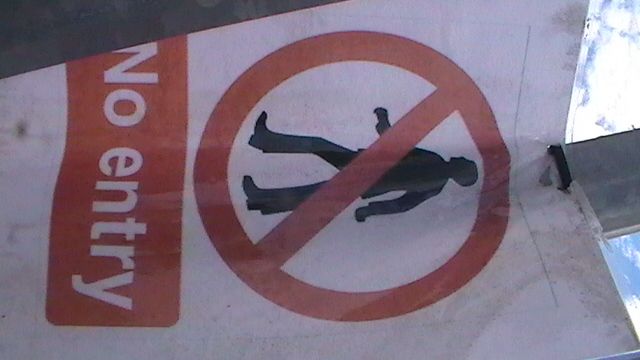
 

S3160009

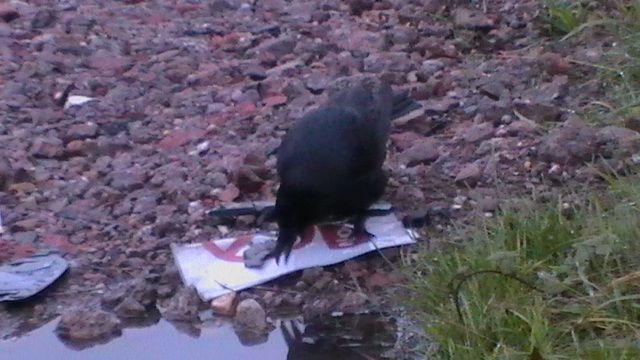
“Proud”- no no pride in areas where people flytip waste, claim benefits where work pays less and reproduce like rats gnawing away at the hand that feeds. Green shoots grow in black places, but so does gangrene.
Posted in Uncategorized | Comments Off on Why I’m not celebrating “Black Country Day.”