Rhodia/Solvay GUILTY of TOXIC ASSAULT ON OLDBURY

   toxicH2060020

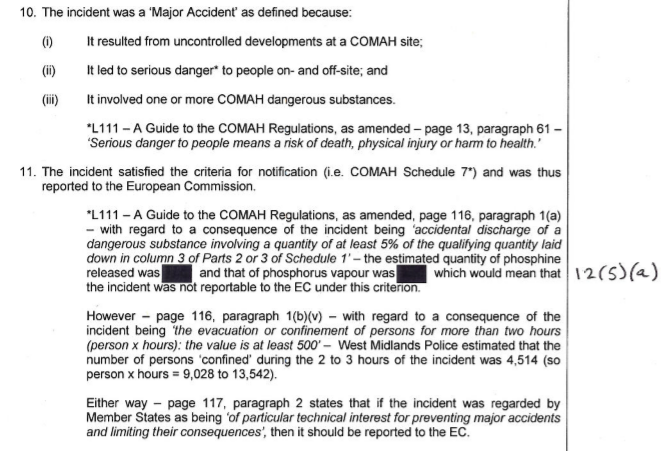
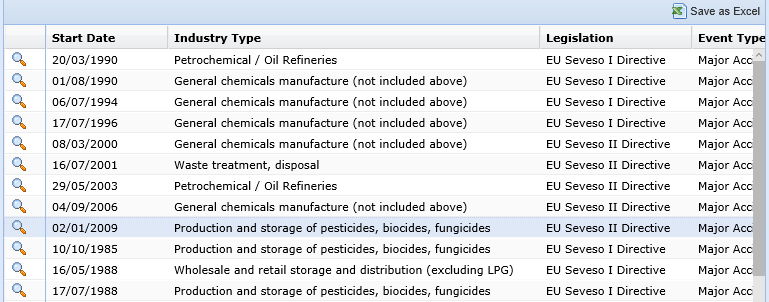
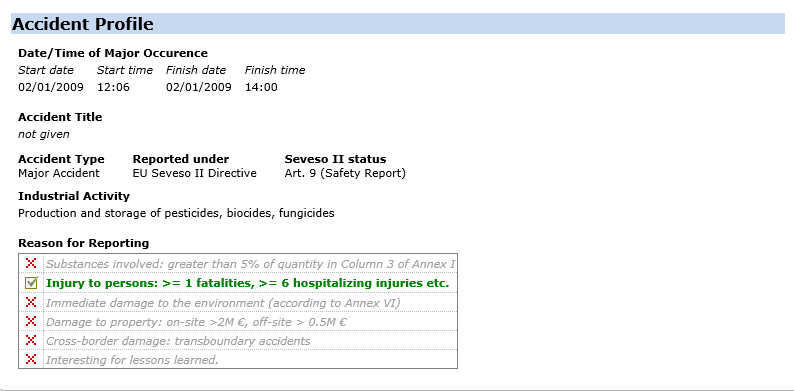
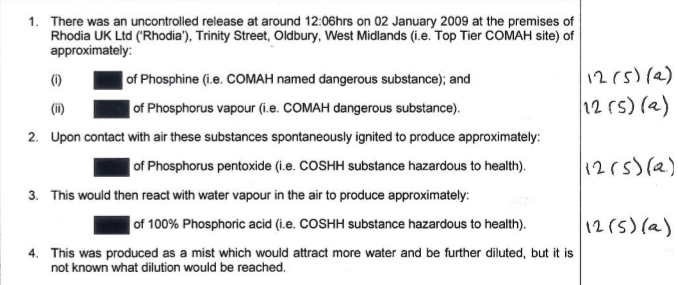
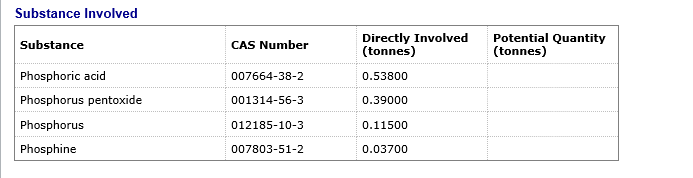
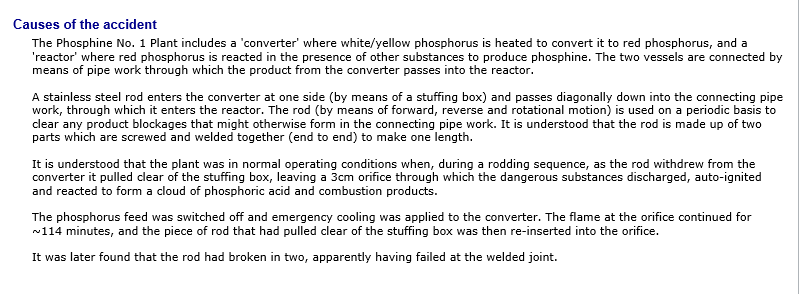
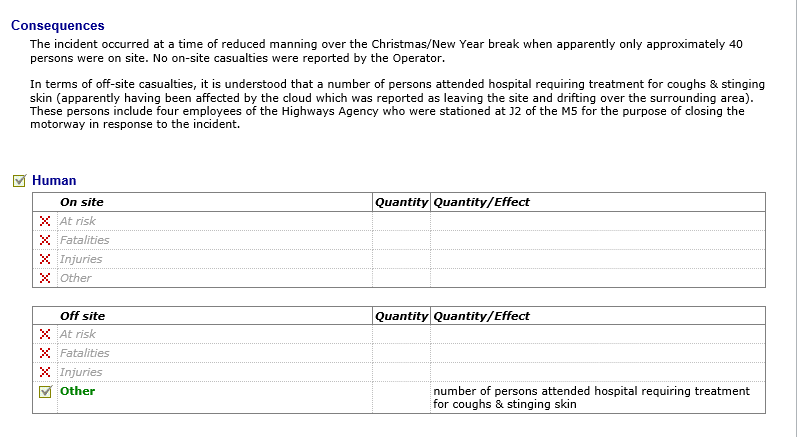
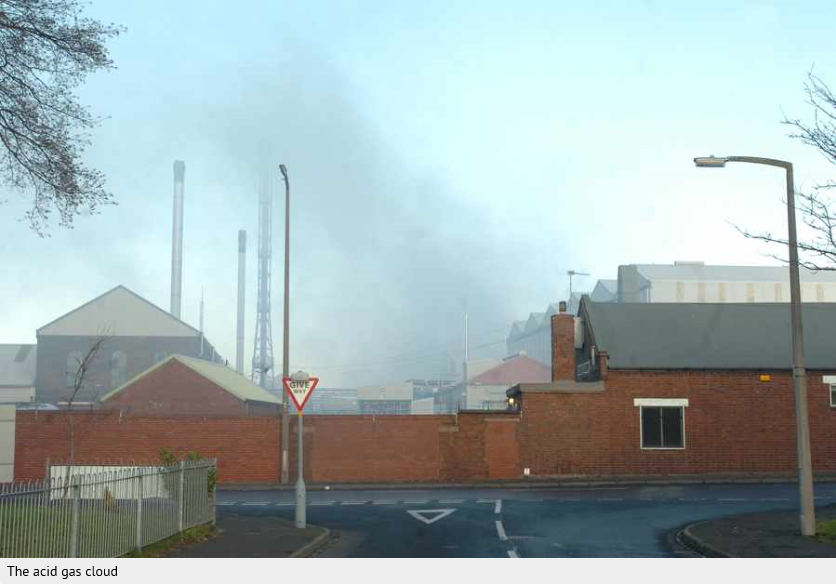
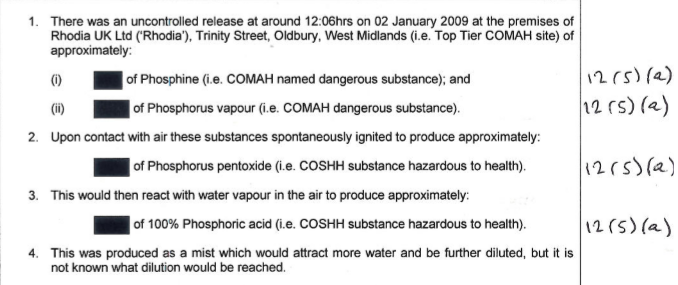
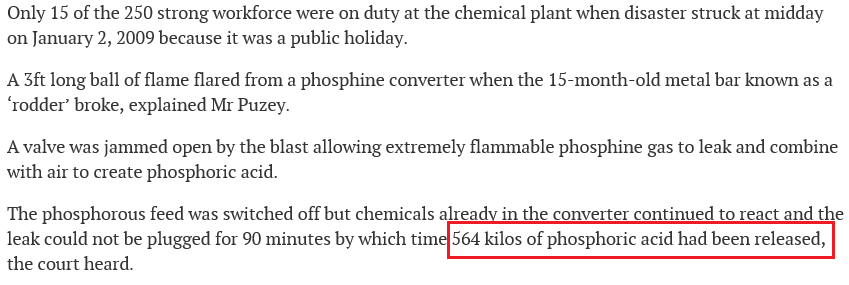
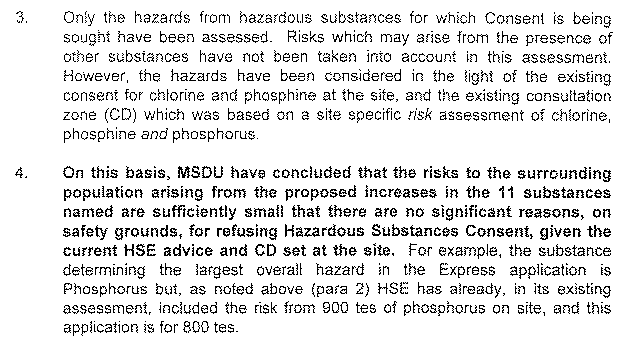
On January 2nd 2009, a serious chemical fire occurred at Rhodia’s Trinity Street site.

The investigation into this and the subsequent prosecution appears to have taken 7 (SEVEN) years which is quite astonishing, but today it was revealed that the company now rebranded as “Solvay” have been fined a whopping £500,000 at Wolverhampton Magistrates Court.

Though this is quite a bit of money, to this firm it is veritable chicken feed. I am aware that they were trying to wriggle out of it, but appear to have finally accepted “Guilt”.

I have been asking for the report into this incident for quite some time, and have now submitted what I hope to be the final request that will release this document.

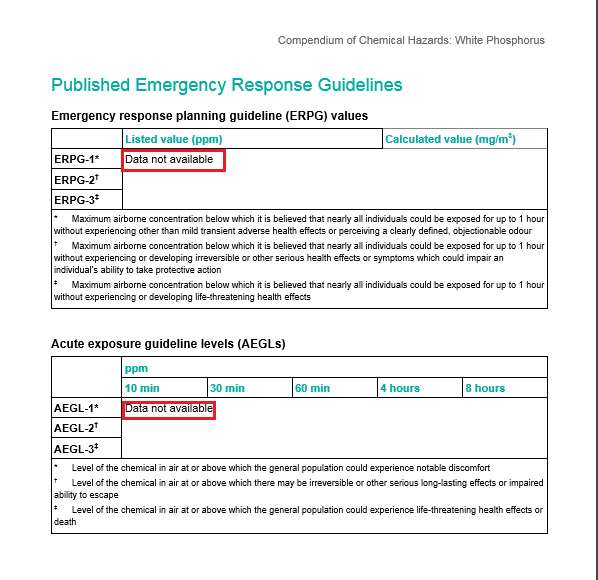
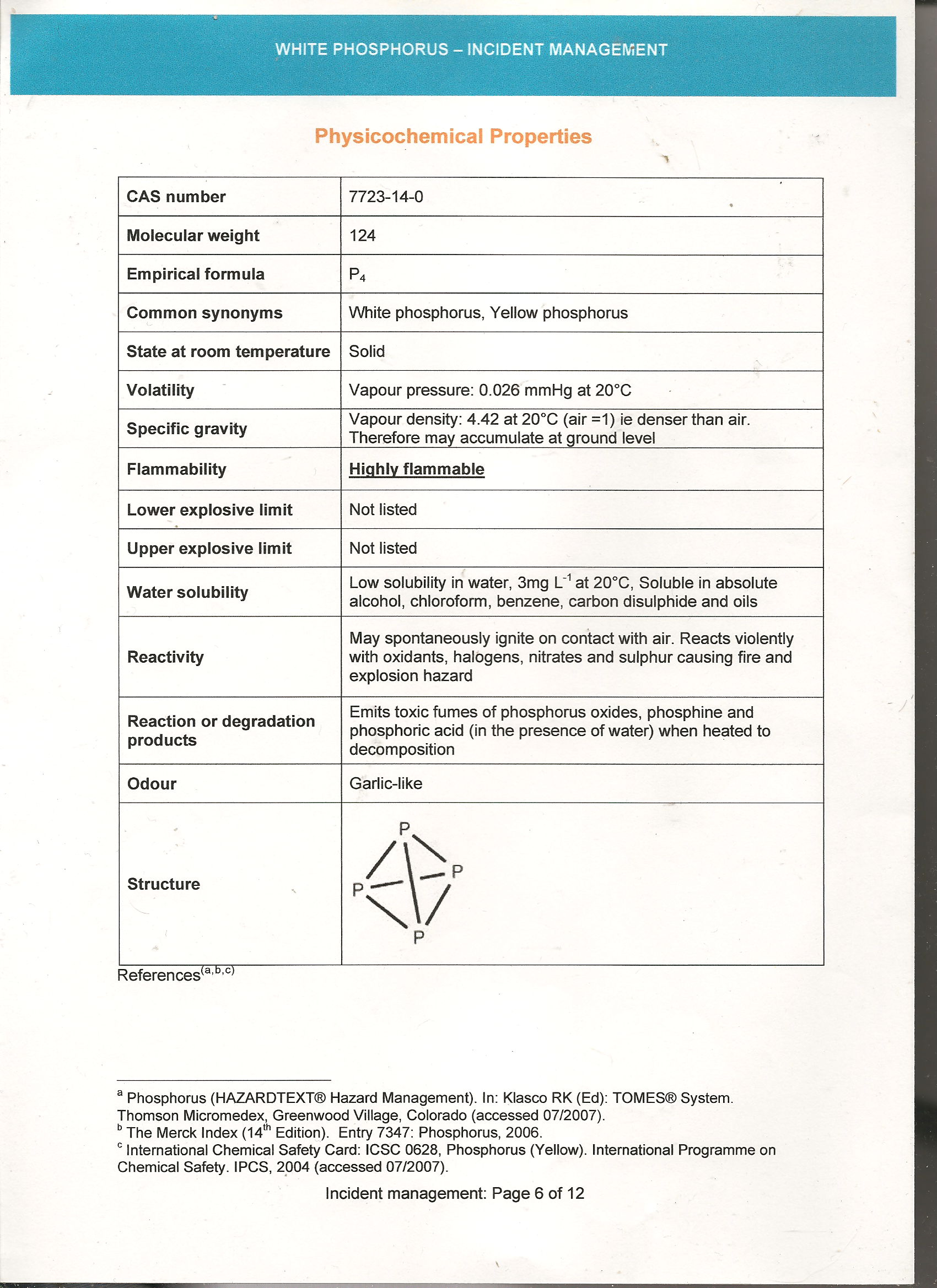
It is stated in The Express and Star article that phosphoric acid was released, yet this is not quite correct given the reports at the time concerning white phosphorus- phosphorus pentoxide converting to phosphoric acid on contact with water.

When white phosphorus is exposed to air it spontaneously forms fumes of phosphorus (v) oxide which is represented by the following equation

P4(SOLID) + 5O2(GAS) → P4O10(SOLID)

Phosphorus pentoxide reacts violently with water to form phosphoric acid.

The reaction produces first the intermediate product metaphosphoric acid, then polyphosphoric acid, and then finally the end product orthophosphoric acid (H3PO4):

The statement made by Solvay’s QC is technically correct in name only, given that at the time of this atrocious health and safety failure they were Rhodia UK Limited, and not “Solvay”. Rhodia, (then known as “Rhodia Consumer Specialities Limited” HAVE been fined previously for dishonestly delaying a report of a chemical spill of the same chemical reported here- phosphoric acid.

This is the same site, and the same Health and Safety officer in charge at the site. Oh how easy PR merchants can spin a line concerning the same chemical factory under a different disguise- just like the smokescreen of white phosphorus that is – the chemical concerned here.

I’m sure that there will be quite a bit of fallout from this, and the same bollocks coming from some of their seasoned apologists of the political class.

02-01-2015_192944(20)

Posted in Uncategorized | Comments Off on Rhodia/Solvay GUILTY of TOXIC ASSAULT ON OLDBURY

Rattlechain 200- The white phosphorus legacy


So 200 blogposts with the 200th page also now up.  This concerns Rhodia’s dirty dozen part 2.

When I started this website it was with the intention of revealing the story behind many years of struggle to determine what was killing wildlife in my local area. I received next to no help from any regulatory authority or top table wildlife organisations.

Yet by persistence, chance and some informative experts on the subject matter, the truth was exposed. WHITE PHOSPHORUS DUMPED BY A LOCAL FORMER MULTI-NATIONAL WAS KILLING WILDFOWL ON RATTLECHAIN LAGOON.

But there was so much more, and still more to reveal about this site, which is why it will continue into the foreseeable future.

CHEMICALS AFFECT COMMUNITIES, and are ruining lives all over the world, yet the chemical industry do not care; they exist for profit in an unsustainable world where the consumer is poisoned by their own selfish lifestyle choices, and many unseen in dark corners of the world by the process which feeds that.

Before knowing what was in the sediment at Rattlechain I stated in a television interview that I thought it was something in the sediment that was killing the birds, whilst Rhodia talked about water tests. Sometimes you have to go with gut feeling, and on this issue I have been totally vindicated. WHITE PHOSPHORUS HOWEVER REMAINS BURIED UNDER WATER AT RATTLECHAIN LAGOON.


liars

Rhodia- your secrets are NOT safe with me


Posted in Uncategorized | Comments Off on Rattlechain 200- The white phosphorus legacy

Pump down the volume


It has been many months since I have seen Rhodia/Solvay pumping water into the Birmingham canal, but with the weather of late being monsoon, it appears that they can no longer contain the volume in the lagoon without mechanically intervening.

S4370003

For some reason they are once again utilising the temporary pump pontoon that had been beached on the causeway path for some time- thus pumping water out of larger capped lagoon rather than the smaller uncapped one.

This appears to defeat the object of the pier pump being there, so there is obviously more to the chemistry going on here than meets the eye. Remember the aluminium sulphate nonsense? Why are they pumping water from this side?

S4370008

S4370020


S4370007

Long hose pipe connecting from one lagoon to the other


S4370021

S4370004

It may be “good weather for ducks”, but not necessarily good bathing in this shit.


Posted in Uncategorized | Comments Off on Pump down the volume

Rhodia’s dirty dozen part 1

After the first swan tested for white phosphorus confirmed its presence, sadly predictable were more dead birds. Here we chronicle in detail what took place after their discovery in Rhodia’s lake of death and the subsequent tests which confirmed that they had been exposed to white phosphorus.

WHITE PHOSPHORUS CONFIRMED IN DEAD RATTLECHAIN CANADA GOOSE

20091014-072627(005)

On 14th October 2009, I observed a Canada goose fitting on the pool shortly before it drowned. The carcass was later collected and a post mortem carried out by the VLA, (now AHVLA) their reference 26-B0069-03-09. No cause of death could be determined by them. On this occasion, after seeking clarification that gizzard contents would be tested for white phosphorus, this was arranged. Once again we had to wait for Rhodia to release the report from Harlan laboratories that tested for white phosphorus in specific tissues.

Read this report HERE.

The report confirms 47.5 micrograms of white phosphorus were found in the gizzard and 0.97 micrograms in the small intestine. Former MAFF/VLA Veterinary pathologist Alan Hunt made the following comments after reading the report

“White phosphorus is slowly broken down in the bird’s tissues, even after death, so the levels would have been even higher if they had had the bits when they were still warm”

Marianne Walsh, of the US Army Core of Engineers , a key scientist in the Eagle River Flats studies which investigated p4 exposure in waterfowl was asked for her opinion on the matter, . Her reply was

“This goose ingested white phosphorus and was poisoned.  The “inconclusive post mortem” indicates to me that there was no discernible tissue damage, which means that the goose died acutely, just like the ducks at Eagle River Flats. “ 

It is clear that the VLA took on board some of Marianne Walsh’s comments, after I forwarded them and went further than they had previously in their interpretation of the cause of death, though still leaving an area of ambiguity.

20091014-072334

The finding of white phosphorus in a Canada goose  provided some surprise for even the experts, given that the species is largely land based in its feeding activities. This limited contact with the lagoon demonstrated that any species landing on the pool could access the sediment and ingest toxic particles of white phosphorus, regardless of its normal behaviour patterns. WHITE PHOSPHORUS IN THE SEDIMENT IS OBVIOUSLY VERY EASILY ACCESSIBLE.

Leading published avian vet Jason Waine MRCVS  commented

“Birds most at risk from access to P4 in this case would be long-necked bottom feeders such as swans, diving ducks and coots (also diving, bottom feeders). I am surprised that Canada Geese have been involved as these are normally field grazers.”

PROFESSOR Bill Roebuck professor of Toxicology and Adjunct Professor of Environmental Studies Department of Pharmacology and Toxicology
Dartmouth Medical School

“I TOO AM SURPRISED THAT A CANADA GOOSE WOULD BE POISONED.  WHERE EXACTLY WAS THE GOOSE AND WHAT WAS IT DOING BEFORE IT WAS POISONED?  PERHAPS THE “NOVELTY” OF ENCOUNTERING A WHITE PHOSPHORUS PARTICLE MIGHT  LEAD TO INGESTION.  THERE CERTAINLY HAS BEEN SOME CONCERN/EVIDENT THAT SHEEP, MUSK OX AND OTHER GRAZING ANIMALS INGEST WP FROM MILITARY ARTILLARY RANGES.  THE LITERATURE IS NOT EXTENSIVE. “

Marianne Walsh:

“the Canada Geese at Eagle River Flats almost exclusively feed by grazing on the mudflats.  I have never seen them in the contaminated ponds.  However, I have seen Canada Geese in ponds elsewhere.  If the geese feed in contaminated sediments at Rattlechain Lagoon, they certainly would be exposed to white phosphorus and would be poisoned.”

Unfortunately Rhodia originally attempted to deceive people by interpreting the report in a different light. The draft letter sent out as an email in error with the Harlan report shows how they originally tried to spin the results to present a different yarn- note the date 13/1/10.

crap

 This however was ditched and was rewritten after they had had sight of a more decisive conclusion from the VLA dated 22nd January regards the result findings, thus proving that industrial scientists can be very skilled liars and deceivers when it comes to manipulating statistics. “This was nearly 50 times less than found in the swan earlier this year.”

scan0001

“THE ANALYTICAL RESULTS CONFIRM THAT WHITE PHOSPHORUS RELEASE IS OCCURING AT THE LAGOON SITE.”


WHITE PHOSPHORUS CONFIRMED IN DEAD RATTLECHAIN MALLARD AND COOT.

On 24/3/10 an email was received from Tom Dutton stating that Rhodia staff had found a dead mallard at Rattlechain the day previous. This was to be submitted to the VLA, their reference 26-B0648-03-10.  I subsequently observed a dead coot on the pool on 16/4/10. After 4 days of unexplained delay on the part of Rhodia, they collected the carcass from the water, also taking it for post mortem to the VLA, their reference 26-B0393-04-10.

20100416-070030

As before no cause of death in either birds was identified, though the coot by this time was obviously severely autolysed, and it was for this reason, according to the VLA, as to why only gizzard contents from the coot were submitted for P4 testing unlike the mallard which was tested for several tissues as before. This conveniently for Rhodia would not allow evidence of “systemic” poisoning, which the VLA state they “cannot confirm”- simply because there were no other tissues submitted for testing- because of Rhodia’s delay. Or is it the case that these tissue samples were tested for in other organs with levels above the 0.02mg/kg level of detection -damaging results for Rhodia, and were thus omitted from Harlan’s report?

The email from Rhodia’s Health and Safety officer to the VLA, who at many meetings sat in complete ignominy of the fact that he knew exactly what poison was in the sediment is particularly telling at this point.

“Although I don’t think this is necessary, my bosses within Rhodia do!”

This is in relation to the coot tissues even  being tested at all for white phosphorus, meaning that if they hadn’t we would have had the same rubbish concerning “not being possible to determine cause of death”- merely on the basis of not wanting to even test the evidence.

 Once again both birds were confirmed to have been exposed to white phosphorus as evidenced by the detection in gizzard content.

Read this report HERE

The results are shown in the table below.

malcoot

The VLA did still not appear to want to make the clear distinction that these birds died of white phosphorus poisoning, and their reluctance to do so continued to cause serious concern in an investigation in which they had played a very small part, except “not being able to identify cause of death.”

scan0013


Marianne Walsh was asked for her comments on the matter. This is perhaps the most important quote of all as a statement of fact regarding this chemical and its association with wildfowl poisoning- from an expert scientist with relevant first hand experience in the field.

“The amount of P4 found in the birds is the amount that is leftover after the birds were poisoned.  There is no way to know how much was ingested.  Our position is that P4 is so acutely poisonous that if there is not another clear cause of death, the presence of P4 in the gizzard indicates exposure to P4 and is the likely cause of death.  I would say these birds died from P4 poisoning.   Marianne.


WHITE PHOSPHORUS CONFIRMED IN TWO MORE DEAD RATTLECHAIN MALLARDS

On 17/11/2010 the carcasses of two adult male mallards were submitted for post mortem examination after having been found dead on Rattlechain lagoon. VLA reference number 26-B0324-11-10. Prior to this Rhodia claimed they had found a gull on the causeway path on 12/11/2010. They also found  a dead partly eaten rat! The gull was also sent for post mortem, VLA reference number 26-B0240-11-10.

As per usual, the VLA could not identify a cause of death in any of the three birds.

There appears to have been substantial delay in the post mortems of these birds and the subsequent collection of tissues by Rhodia and them then taking them to Harlan Labortories for testing, as this email confirms- three months.

Subsequent white phosphorus testing proved once again exposure to white phosphorus, with no other cause of death being determined at levels of 0.158 micro grams and 0.986 micro gram respectfully in the two ducks. None was detected in the gull, though this “red herring” should not detract from the result of the upending birds which feed mainly on the P4 laced sediment, unlike the gulls.

Read this report below.

harlan ducks and gull

On this occasion the VLA stated “We can conclude that white phosphorus poisoning was probably involved in the deaths of the two ducks.”

Scan_20160101 (2)

There was however continued obstinacy from the VLA to make a clear unequivocal statement without using words such as “likely”, and “probably”. I questioned the term “systemic exposure” with the VLA and yet when challenged to undertake such analysis I received the following letter which appeared to suggest that despite making one statement as to how to “prove” cause of death to them, they did not think it “necessary” to undertake such analysis. Such hypocritical statements from this quango only further served to enforce the belief that they did not want to make such a diagnosis, and neither would Rhodia. IF SCIENTISTS DO NOT WANT TO TEST THE EVIDENCE THEN ONE WONDERS TO WHAT EXTENT SCIENCE IS BEING MANIPULATED TO SUPRESS INCONVENIENT TRUTHS.

scan0012


By now it was obviously apparent to Rhodia that birds found dead at the lagoon, were all “likely” to have been exposed to and poisoned by their white phosphorus waste stream, even if they were not prepared to admit the fact decisively as a result of the excuse of not knowing how much of it the birds had ingested.

A similar weak argument was used by the defence in the conviction of a murderer whose choice of poison was the same as Rhodia’s poisoned birds.

Posted in Uncategorized | Comments Off on Rhodia’s dirty dozen part 1

Old “friends” for dinner

When one thinks of Christmas, we are often drawn to “the works” do, or the office party. With a Quaker company originally like Albright and Wilson, one could hardly think that in times past these would have been riotous affairs, (except with one another’s cousins maybe 😆 ), though maybe some grog was served with the roast hog.

Two accounts of “festive” occasions are given in this blog post. The first is an invitation card to The 8th Worcester Oldbury Home Guard dinner held on December 1st 1944. In context the home guard had now been disbanded the month before, when it was clear that Britain was now amongst the allies that would win the war very shortly; not that Albright and Wilson had much to do with this however. It is clear, from some of the names within this battalion that they played a major part in the local home guard organisation.

Scan_20151214 (4)


The menu that evening served tomato soup as a starter followed by roast chicken and ham, Brussel sprouts, Cauliflower, and roast and boiled potatoes.

Afters were Christmas pudding and mince pies served with coffee and tea.

Scan_20151214 (5)


What a line up of entertainment was on offer that night. The Broadwell air must have turned blue that night with Dick Lawler’s jokes. And of course The Langley band were on hand to pump out a few sharps and flats.

At this point in their history, the company were in what was known as “care and maintenance”– basically dumping all the shit from war production down the road in Tividale.

Fast forward to the works centenary dinner in April 1951, and a very different festive air appears to take place. The 100 years of phosphorus making volume outlines what took place then after the company had become a public company. At this point the managing director of the company was one W.B Albright. Chairman was Kenneth Wilson. Both were grandsons of the founders.

This dinner at the Savoy Hotel in London was attended by over 400 guests, including a future Prime Minister Anthony Eden who was then Chancellor of their Edgbaston mates at the University of Birmingham. Entertainment that day was provided by renowned pianist Eileen Joyce, (perhaps the LPB couldn’t afford the trip to the capital.)

Of note that night is a line of the Chairman’s speech

“White phosphorus, besides behaving intemperately if parked in a dry place, IS A POISON,; and people working in match factories were subject to a frightful disease, phosphorus necrosis.”

A lesser do was then held for some of the staff in Birmingham, though no doubt the menu would have been less appetising. Perhaps Louisa Merrifield was doing the catering.

WISHING EVERYONE A MERRY CHRISTMAS AND A HAPPY NEW YEAR. BE CAREFUL WHAT YOU CONSUME THIS CHRISTMAS- I’M HAVING AN OLD FRIEND FOR DINNER.

rot

Sgt Wilson’s lonely Hell club band


Posted in Uncategorized | Comments Off on Old “friends” for dinner

Back to the birds


Sometime in 2014 I was putting together the story of how wildfowl at rattlechain had first been identified to have been exposed/poisoned by the white phosphorus in the lake. Unfortunately whilst Rhodia claimed to be addressing the issue that they had long delayed and denied, so it began to unravel that Sandwell council had murdered 220 Canada geese in two of its parks.

The council were well aware of the rattlechain issue and did absolutely nothing about it. Yet somehow in their bizarre twisted little minds, the geese posed a “health risk” to members of the public and were exterminated- they have still to produce any credible evidence to prove this.

On the other hand our long battle that they undermined with this single action, was proven by the testing of twelve birds consisting of five different species- all exposed to a poisonous substance, proving that their Oldbury business chums had poisoned the birds.

So picking up the threads of where I had left of, I have now started to put together these important pages to stand as a testament to the unfortunate creatures and hopefully give them and the many others that were never retrieved or those  which had shown white phosphorus poisoning symptoms but were never tested some justice.

Part of this is showing up the human incompetence, from a regulatory point of view to how the birds were treated by the then VLA staff, and the poor standard of investigation which transpired.

It is perhaps timely to do this when in the week I saw a dead coot being eaten by a buzzard at the side of the newly profiled North embankment. Who knows what caused its death, it had gone the next day without trace, but it was noted like the many that had gone before.


S4190003


Let us hope that as more digging has mysteriously appeared on this embankment, that the phos has not awakened, or a portal to attempt to disperse its breakdown products opened.

S4240002

S4240003

More bank cover up

So as we take a closer look at Rhodia’s dirty dozen, let’s first look at the incompetence which led to “phosphorus” being tested for in a dead swan and mallard instead of white phosphorus. One would think that scientists would know the difference, but it appears sadly not in this “error of communication”. As ever with all concerning the story of rattlechain lagoon, we only learned of this through persistence and the Freedom of Information Act.


Posted in Uncategorized | Comments Off on Back to the birds

The cruel poisoners

One of the most infamous cases involving the use of phosphorus based rat poison involved Louisa Merrifield. She was the care worker from hell, who ingratiated her way into the affections of an elderly 79 year old cantankerous spinster named Sarah Ricketts and through greed poisoned her to obtain her house. She had managed to change the will of the old woman from Blackpool in her favour just two weeks after moving into the property with her husband Alfred.

Alfred was in fact her third husband and there has to be suspicion that Merrifield had already bumped off the other two elderly husbands whose deaths could not be proved for their money.

A previously convicted fraudster, Merrifield boasted of her good fortune at coming into money and told two people that she had already received a windfall from an old woman who had died- this before her plan had been even commenced. Her husbands name also appeared on the will, and this led to him also being accused of murder.

Merrifield first attempted to get a doctor to affirm that Mrs Ricketts was of sound mind when signing her changed will, which did not work and then began a process of trying to convince others that her employer was seriously ill. One wonders today if she had what is known as having “Munchausen’s syndrome by proxy”, but this psycho babble undermines the intent on which people like Merrifield had.

The dose of phosphorus was delivered in the form of Rodine rat poison , disguised in rum. Alfred had bought a tin from Manchester before Mrs Ricketts death. This was another black mark against him as a potential co-murderer.

The presence of rum disguised the taste of phosphorus. Had she already used the method on her two dead husbands to perfect the technique? Unfortunately for Merrifield her knowledge of phosphorus poisoning was not that good however as she made the mistake of administering more than one cocktail of the substance. In between doses she called a doctor in an attempt to try to prove that the old woman was becoming deathly ill, but as phosphorus poisoning initially gives the impression that someone is recovering, she administered another dose which would be her undoing. For this reason, traces of the second dose would be found.

The doctor refused to sign Mrs Ricketts death certificate, and soon a trail leading to the Merrifield’s and their motive led to their arrests and trial.

The 1953 trial was most interesting in its examination of forensic evidence , particularly in “proving” that phosphorus had caused the death of Mrs Ricketts. We have of course had the same nonsense originally from Rhodia in attempting to “prove” that deaths of wild birds were being caused by the same chemical, and where “small amounts” that could not be found in larger amounts due to the nature of the evanescence of the element , would not be enough to cause death.

An original cutting of the case is shown below, and it is quite amazing that the prosecution witness Dr George Manning took it upon himself to concoct a potion of rum and rat poison and actually put it in his mouth without swallowing it.

Unfortunately no phosphorus traces were found on a spoon found in Merrifield’s bag, and the defence witness, Professor J.M Webster whom amongst other titles was Professor of Forensic medicine and toxicology at the University of Birmingham- (Albright and Wilson “friends”), attempted the ludicrous claim that she had died of natural causes and liver necrosis. It would be interesting to know what method was used in determining the amount “found” in Mrs Ricketts’s system, which of course would not be the amount she actually swallowed.

Scan_20151121 (3)

In an eleven day trial at Manchester Assizes, Louisa Merrifield was found guilty of murder yet her husband was acquitted due to lack of evidence. Bizarrely he was even allowed to inherit half a share of Mrs Rickett’s bungalow from the murder.

An appeal was rejected, and on 18th September 1953, Louisa Merrifield was hanged by Albert Pierrepoint at Strangeways prison.

“You have been convicted on plain evidence of as wicked and cruel a murder as I have ever heard tell of” Mr Justice Glyn -Jones told Merrifield as he had sent her down.

It is with some irony that just ten years later, new legislation would be passed using this exact same word “cruel” to describe the effect of white phosphorus on animals.

Merrifield was of course a very foolish woman, yet with expertise in analytical chemistry, it would be quite possible to poison someone with such a chemical even today, whereby those carrying out such a post mortem would probably have no experience of ever coming across a person whom had ingested white phosphorus without their knowledge.

Perhaps it should not just have been Louisa Merrifield on the scaffold that day but the directors of Albright and Wilson, whose company had manufactured this “cruel poison” which killed Mrs Ricketts. Their poisoning of wildfowl would take  many more years to deduce, with their cocktail containing “toothpaste” instead of rum to disguise the taste.


Posted in Uncategorized | Comments Off on The cruel poisoners

A bum note from the French horn

A while back we reported on Solvay’s big band practice.  A recent press report appears to confirm that The Langley Band have now completed a move into the former police station fronting Trinity Street and are renting a room from the chemicalsters. Yes that’s about the size of the story, with a cake and self promotion chucked in. How many groups/clubs/societies change venue for one reason or another every day of the week? Jeez.

As for the bum note, this is provided by Solvay site director (they used to be called works managers who lied about chemicals coming out of the factory).

Jean-Francois Berthiaume is quoted “Solvay is proud of its historical links with the community.”

Well that’s really interesting that because they were so enamoured with their “historic links” at  Rattlechain that the Belgians chose not to rebrand their logo onto the gates down John’s Lane. THEY REMAIN UNDER THE TARNISHED RHODIA MONIKER.

S1980001

And lest we forget the immoral conscience of Albright and Wilson the company where so readily its tentacle web of external links polluted minds as well as the environment.


Posted in Uncategorized | Comments Off on A bum note from the French horn

“Shocking History”- THE PHOS AWAKENS

 “White phosphorus has three unusual properties: it glows in the dark, it bursts into flames when exposed to air, and it is a deadly poison. Little wonder that it aroused the interest of the early chemists and has left in its wake a trail of minor tragedies and major catastrophes.”

Scan_20151019

In another post concerning phosphorus, this New Scientist article from June 1977 outlines the story of the discovery of the elemental form by Hennig Brandt and quite a bit more history that has transpired since that fateful first illumination. John Emsley would later write “The shocking history of phosphorus”, alternatively known as “The thirteenth element-A biography of The Devil’s element” for the American market.    This appears to be an early  precis version of this book, but gives compact detail about how white phosphorus has been used both foolishly and with malice.

“Phosphorus firebombs were the most immoral use to which the element has ever been put. These devices played a minor but terrible part in the frenzied urban holocausts inflicted on European and Japanese cities in the latter half of the Second World War. The burns produced by droplets of blazing phosphorus were notorious for their deep penetration, intense pain, and slowness in healing. Deployment of these weapons led to the same feeling of outrage that a later generation expressed about napalm.”

From quack doctors and match making madness to murder and war, Emsley covers it all in this article, with pointers to some environmental incidents as well. Albright and Wilson are of course mentioned, though at this point in history their company was going down the swanny in its own steam. We do learn from the piece that in 1977, production of p4 was at over 2 million tonnes, this just 14 years after the chemical had been banned in Britain for rodenticide use being a “cruel poison” .

Emsley offers a frank account of the chemical which probably did little favour for its manufacturers corporate attempts to paint their industries social responsibility agenda. In 1977 this was important and the spotlight was very much on legal reform of the waste industry in Britain. One can imagine the top brass at Albright and Wilson feeling a little uneasy under the collar when reading such a piece and candid appraisal of their element’s use, deliberately omitted in their company history “100 years of phosphorus making” published 26 years previously.  Unfortunately however appearing in such a title as The New Scientist and before the advent of the internet age the information would not be read at large by the public- the ones that needed to know what that chemical factory down the road in Oldbury and others like them were actually doing with such a chemical on their doorstep.

It would have been good if the West Midlands County Council and in particular the fool of a county waste disposal officer when passing the site licence in December of that year had actually read such an article, and furthermore taken on some of the facts on board.

“There appear to be no environmental implications in the continued use of the site.” was what Ken Harvey decreed , and how wrong he was- totally in every respect.

The final paragraph is perhaps the most telling in relation to Rattlechain and Rhodia/Solvay’s burial of the chemical under water. The bird deaths at the site over the years just open up a can of worms that continue the “shocking history” of the chemical and also the shocking way that those in charge of such sites  appear more in awe of it to be able to stop its wrath.

“Elemental phosphorus played an important part in the development of chemistry since it was a useful starting material for hundreds of new compounds, but to allow it to escape from the laboratory and into the world at large was an act of folly. Today it is safely tamed and back in its cage; but when that cage is a rail tanker holding molten phosphorus (which is how it is transported in the United States for example), one wonders how long it will be before it strikes again.”

Scan_20151019 (2)


Scan_20151019 (3)


Scan_20151019 (4)


Scan_20151019 (5)

S1980001

For how long will Rhodia Limited be able to contain their beast?

Posted in Uncategorized | Comments Off on “Shocking History”- THE PHOS AWAKENS

Chasewater revisited


S3590001

Back in July, I blogged about an unreported pollution issue at one of the regions main areas of water, which attracts a large number of wildfowl. Swans at Chasewater Country Park have over a number of years suffered lead poisoning, with several birds at the start of the year found either dead or ill.

I also looked at one particular former waste disposal licence granted to Walsall council during their period of control at the site where they were allowed to dump their parks and recreation waste. This was just one of several licences in the vicinity of this site, and there is far more industrial history associated with the area than just this, which I never intended to go into in that blog post. It is just one idea that was previously not chronicled by anyone else, and just as valid a source of the lead as any other, and certainly the one being offered by the local council.

I also mentioned the manner in which  Staffordshire County Council had misled the public about a “boating lake ” which they and others had previously called “the duck pond”. They stated originally that it would be refilled , but it never was. This is important because when the wildfowl were on this lake and not the main contaminated one, the link of poisoning was broken. It was therefore in some respects from someone who cares about these birds, more desirable to have them reside on “the duck pond”. In the past a pair actually bred on the island, which is practically impossible on the main lake due to fluctuating waterlevels and no suitable habitat.

Following this I asked a freedom of information request to this council asking for clarification about this issue. This was dealt with in the previous blog post, but I asked for an internal review because the original response was basically a press release and not a freedom of information response to the questions I had asked.

I challenged them on a number of points.

“The response that I received was a potted history from the council’s point of view, but contained no hard information to corroborate any of it. I therefore request the communications with Natural England concerning this pool as stated- letters, emails etc
in my request, and not a summary PR spin job.
You also failed to answer my question concerning recorded information as to what level within your council this decision was taken to drain and not refill the pond. Ranger, cabinet member- who?
It is noted that for several months your council misled people with notices that the pool was going to be refilled, and that since the lake was drained several swans have died from lead poisoning on this lake, whereas they were not when occupying “the duck pond”-
which was called this on one of the noticeboards at Chasewater country park until for some reason it was recently removed after this request had been made. I have pictures.


The council did come back with more information than it had provided previously, and this in part is what I am now reporting in this post. This appears to be a series of emails internally within the council, concerning my request and also information that I had requested originally. Let’s deal with this one first-
“—–Original Message—–
From: Glaisher, Ali (Place)
Sent: 21 July 2015 14:57
To: Wykes, Ian (Place); Sharman, Matthew (D,L&T); Archer, Steven (Place); Holford, Steve (Place); Saberton, Dan (Place)
Cc: Allen, Gemma (D,L&T)
Subject: RE: Internal review of Freedom of Information request – Correspondence with Natural England regards Chasewater duck pond GA2542

Ian

It was not a duck pond but a boating lake.  We need to remember that.

Correspondence attached

Lead poisoning would not be an issue if people stopped feeding swans and geese where we know there is an issue due to the old firing range and have a notice asking them not to.  The notice could be made more prominent.”

I am afraid this shows the total lack of understanding of the ecologist at this council, Ali Glashier about the whole issue.

  • THEY CALL IT THE “DUCK POND” IN THEIR OWN RESPONSES IN THE EMAILS!!
  • LEAD POISONING WILL STILL BE AN ISSUE FOR AS LONG AS THE BLOODY LEAD IS IN THERE!
  • THEY DO NOT HAVE ANY PROOF THAT THE OLD FIRING RANGE IS TO BLAME FOR THE SOURCE, AS WAS DISCUSSED IN THE PREVIOUS BLOG POST.
  • THE FACT THAT THEY APPEAR TO CONCENTRATE ON FEEDING APPEARS TO BE A SEPERATE ISSUE ALTOGETHER (THEIR PET HATE), TO THE FACT THAT BIRDS WOULD STILL UPEND FOR FOOD IN SHALLOW SEDIMENTS AND INGEST THE MATERIAL.

The actual correspondence with Natural England appear to take place between Dan Saberton ecologist at Chasewater and Jacylyn Lake “lead advisor Staffordshire land management team.”    . NOTE IT IS REFERED TO HERE AS “CHASEWATER DUCK POND” BY BOTH!

From: Saberton, Dan (Place) [mailto:[email address]]
Sent: 06 October 2014 12:09
To: Lake, Jaclyn
Subject: Chasewater Duck Pond


Hi Jaclyn,

Hope you’re ok?  Hope my answerphone message wasn’t too garbled!

Just to keep you up to date with the duck pond, we’ve emptied it and disposed of the water.   We’ve had a contractor repair the valve this last week and we are now considering re-filling it.   We’re still not sure if we are going to re-fill it as if we have to empty it the same way the cost would be prohibitive.

Did you manage to get any figures for nutrient levels that we would be able to discharge?  I appreciate that it probably isn’t as simple as we’re imagining!

Noreen has suggested we get together to discuss options for the pond, would you be happy to come along?  If so would you like to suggest availability ?

Many thanks

Dan”

AT THIS POINT IT APPEARS THAT THE COUNCIL WERE DUBIOUS ABOUT REFILLING THE POND AND WERE PROBABLY LOOKING FOR AN EXCUSE NOT TO- HENCE “NUTRIENT LEVELS”.

A reply was received below.

From: Lake, Jaclyn [mailto:[email address]]
Sent: 08 October 2014 11:12
To: Saberton, Dan (Place)
Subject: RE: Chasewater Duck Pond


Hi Dan – sorry for the delay in getting back to you

I have chased Ruth for some guidance on the acceptable level. What do other councils with duck ponds do?  I will try and find out. 

Is there really no way that some of the water could be drained into the nearest sewer?  At a really low rate over a long period?   

Can you give me a bit of time to ask around to see what other people have done – this must not be a unique problem!

Thinking about it, could the pond not be turned into a wildlife pond?

I need to email you with some guidance about the crassula pond and ditch – would you be able to do some spraying of the ditch this autumn/winter?

Kind regards


Jaclyn

It appears at this point that the person at Natural England is a little out of their depth re “duck ponds”!

If that appears bizarre the next reply email from the so called “ecologict” at Chasewater really is off message.

From: Saberton, Dan (Place) [mailto:[email address]]
Sent: 08 October 2014 15:15
To: Lake, Jaclyn
Subject: RE: Chasewater Duck Pond


Thanks for this Jaclyn,

We’re trying to think of other ideas for the pond, I’ve even suggested turning it into a skate park or go-kart track!  

I’m sure we can try and spray some crassula in the ditch, it’s a bit weather dependent as I think it needs to be done before we get a frost? If you’ve got some guidance you can send over that would be great.

Many thanks

Dan

HOW IS IT POSSIBLE THAT AN “ECOLOGIST” IS CONSIDERING TURNING A HABITAT AREA FUNCTIONING FOR YEARS BEFORE HE CAME ON THE SCENE AS ANOTHER BLOODY HUMAN SPORTS RELATED PIECE OF CRAP? AT THIS POINT THIS COUNCIL WERE CERTAINLY NOT SHARING THIS VISION WITH THE PUBLIC.  THE NEXT EMAIL FROM SABERTON DATED  26TH JANUARY IS EVEN WORSE..

“From: Saberton, Dan (Place) [mailto:[email address]]
Sent: 26 January 2015 15:02
To: Lake, Jaclyn
Subject: RE: Chasewater Duck Pond


Hi Jaclyn,

Thanks for the info about the crassula, I’ll have a look at the options with the Rangers and we’ll see if we can come up with a plan.

On another subject we’ve finally come to a decision about what to do with the concrete duck pond, having looked at all the different options we’ve decided to fill it in with stone and then soil and eventually we hope to use the area for a type of outdoor gym.

We’re currently looking at sources of material for filling it etc but I just wanted to check before anything starts that as long as the valve is secured shut and nothing can get from the pond into the Lake then we don’t need to get any consents from yourselves for the work? 

Hope all that makes sense?

Cheers

Dan

  •  IT SHOULD BE NOTED  THAT THEY WERE STILL NOT TELLING THE PUBLIC THAT THEY WERE NOT GOING TO  REFILL IT.
  • THE OUTCOME THAT I JOKINGLY REFERED TO IN THE PREVIOUS BLOG POST ABOUT TURNING IT INTO “A POOR MAN’S GYM” IS DEPRESSINGLY ACCURATE!

The final email released on the subject is from Natural England to the two ecologists in April, and mentions an event where several people were swimming in the very lake that they appear to suggest certain birds were polluting. One wonders if this new emphasis on attracting sport and money and TV cameras is what is behind all this. I certainly suspect it is the case.

From: Lake, Jaclyn [mailto:[email address]]
Sent: 28 April 2015 17:45
To: Glaisher, Ali (Place)
Cc: Saberton, Dan (Place)
Subject: Chasewater duck pond – clarification


Hi Ali and Dan

I am just following up on our conversation last Wednesday after the Ironman meeting.

Despite the problem with the birds, I wasn’t suggesting that SCC refill the pond and reconnect it to Chasewater.  The info we were given at the time by SCC when we advised that it couldn’t be reconnected to Chasewater was that the pond had not been cleaned out for 5-6 years and working with the water analysis we were given, assuming a steady build-up of nutrients over time, we gave SCC the following advice at the time:

The target for the total phosphate in Chasewater is no more that 25ug/l.  With this in mind and the likely accumulation rates of TP in the duck pond water (and not knowing what else if being released into Chasewater) the TP level in the duck pond would always be too high to be able to release it into Chasewater.

The best result though would be that you keep the duck pond somehow (I suggested a wildlife pond or trying to dispose down a sewer slowly but neither of these were viable). Assuming the duck pond is not refilled, I asked our bird people about the long term impacts of the geese moving to Chasewater.  How the geese respond will depend on the attractiveness of Chasewater against the nearby alternatives, and until some monitoring has been done, we won’t know and by that time they could have already done some damage and the population could have increased which would be an even bigger problem.

What I was trying to say on Wed is that SCC need to monitor the numbers of swans and geese that have moved onto Chasewater to see if they start breeding and the impact they may be having on the shoreline.  I have asked our bird specialist to see if he can advise about monitoring in this situation.

Sorry for not being clear last week.

Regards

Jaclyn

Jaclyn Lake

Lead Adviser

Staffordshire Land Management Team

  • So Natural England’s assessment appears based on information supplied by the council rather than its own.
  • The level of 25 micrograms per litre appears to be excessively small. Consider that at Rattlechain the environment agency granted a site licence which appeared to allow several milligrams per litre  to be discharged as phosphate (total phosphorus) directly into the Birmingham canal navigations- THE VERY SAME END FATE FOR THE WATER AT CHASEWATER- WHICH IS AFTER ALL A CANAL FEEDER! SO WHY THE DISPREPANCY? (1 microgram is one thousandth (1×10⁻³) of a milligram.)
  • During their so called “human health risk assessment” at Rattlechain lagoon, The Health Protection Agency ( now Public Health England) noted a Total phosphorus figure in the Birmingahm Canal of 1330 micrograms per litre. This reading supplied to them by The Environment Agency.
  • THEY NOTED THAT THERE IS NO HEALTH OR ENVIRONMENTAL BASED WATER QUALITY STANDARD FOR TOTAL PHOSPHORUS.
  • THEY FURTHER NOTED THAT THE EU STANDARD FOR THE PROTECTION OF SURFACE WATERS INTENDED FOR THE ABSTRACTION OF DRINKING WATERS WAS 400 MILLIGRAMS PER LITRE.
  • SO BASICALLY PEOPLE ARE NOT DRINKING WATER OUT OF THIS SITE SO HOW AND WHY DO NATURAL ENGLAND COME OUT WITH A FIGURE OF ABOVE 25 MICROGRAMS PER LITRE OF TOTAL PHOSPHORUS BEING TOO HIGH FOR RELEASE? THE TP FIGURE FOUND IN SURFACE WATER AT THE CHASEWATER DUCK POND IS NOT GIVEN IN A LABORATORY TEST REPORT. The report states
  • “Comment The water sample was found to satisfy the requirements of The Bathing Water Regulations 2013 for inland waters. These regulations define standards for the microbiological quality of bathing waters which in this case, is classified as ‘Good’ with respect to the above parameters.”

  • The entire basis for non release of water into the main reservoir is therefore absolutely crazy, and one wonders if this type of diktat is all Government officials have to do with their time one can only favour job losses within cuts to their quangos.
  • Lake’s entire philosophy on the matter appears to be anti wildfowl, which fits perfectly in line with this vile wildlife murdering quangos appeal to Conservative businessmen and backers. Oh who runs SCC?

So on a recent visit to the site, it now appears that the council are going ahead with turning a pool into something else, though they appear to be not too vocal in reporting it judging by the solitary sign advertising the planning application L.15/10

S4050009

So inspecting the council’s website a number of interesting documents fill out a bit more detail.

APPLICATION FORM

The council are applying for permission themselves.

PLANS OF THE SITE

One can see from this schematic diagram the domination that sport appears to play now at this site.

BASIC

LOCATION PLAN

PLAN PROPOSALS

The main detail comes in the SUPPORTING STATEMENT.

“The water was tested and water quality was found to be too poor because of the bird feeding for it to be released into the reservoir. The cost of emptying the pool elsewhere and removing the silt was in the region of £15000. (Please see chemical analysis of water attached)” 

As evidenced above, the water quality standards that this council are producing do not state this whatsoever. THERE ARE NO READNGS FOR TOTAL PHOSPHORUS IN THE REPORTS IN THE APPLICATION. SO WHAT EXACTLY ARE THEY DOING IN PEPETUATING THIS LIE?

The Proposal 
It is proposed to infill the boating lake with 3000 tons of soil from Chasewater Heritage Railway, this would not be construction or excavated waste. The soil has been tested and no contaminants are present. (See attached report). It is proposed that the infilling operation will take about 10 days to complete.  It is intended that these operations will take place on weekdays outside of school holidays to reduce disruption to visitors.  The work is proposed to take place between November 2015 and March 2016. 
Prior to infilling the concrete liner of the pool will be pierced on a 2 metre grid to allow infiltration drainage to occur.  The valve to the Reservoir will be sealed closed meaning there will be no direct link to the Reservoir.  
Once infilled, it is proposed to grass and landscape the site in accordance with the proposals set out in the attached landscaping scheme.   
The possibility of installing an exercise trail or other facilities such as mini-golf on the grassed area are being investigated but will be dependent on whether sufficient funding can be secured. These types of proposal are in line with the Development Plan proposals for the site.”

NO ATTATCHED SOIL SAMPLE ANALYSIS IS PROVIDED IN THE MATERIAL, SO ONE WONDERS WHO CARRIED THIS OUT, AND WHY THEY ARE INTEDNING TO USE THIS MATERIAL- IS IT CONTAMINTED, BUT REMOVING IT “OFF SITE” WOULD BE TOO EXPENSIVE FOR THIS “POOR” COUNCIL? IS GETTING RID OF THIS “CONTAMINATED” SOIL BY THE BACK DOOR  WHAT IS BEHIND THIS COUNCIL’S DESIRE TO FILL IN A POOL?

Another outline history of Staffordshire’s involvement with this site is detailed, yet they appear to try to distance themselves from admonishing Lichfield district council, who for years had quite happily allowed water to flow into the main lake, and with what problems did it ever cause?

S3590006

Water flowed from the duck pond into the main lake


S3590010

The water way

S3590012

Water flowed out into the main lake


Following some reorganisation  to the layout of the south shore by Lichfield District Council a few years ago, members of the public have been feeding the wildfowl both on and by the boating lake, encouraging them to settle on it.  As a result, the boating lake has become known locally as the “duck pond.” 

There are claims about water quality, yet the supporting scientific evidence does not show what they are claiming to be the case, and it is not clear from these two results what they are actually trying to prove. There is no result for total phosphorus even provided. When the Natural England officer as seen earlier doesn’t appear to have a bloody clue, one wonders why this council are so keen to argue on a point concerning total phosphorus. On a lake the size of Chasewater this amount of discharge would be absolutely negligible, as would the amount of total phosphorus produced by any birds. (Conservationists appear to have a great obsession for phosphorus in duck shit, yet human shit and elemental phosphorus as demonstrated at rattlechain appears to go completely over their self important bigoted tiny minds.)


See Ali Glashier’s ecological statement

“It is not predicted that there will be adverse impacts on the Chasewater and Southern Staffordshire Coalfield Heaths SSSI due to the proposed works.” 

Except that birds will continue to be lead poisoned, but this appears unimportant because of the bloody SSSI status.

S3590004

S3590005

excluded and relegated for human expansion

NEEDLESS TO SAY I WILL BE FORMALLY OBJECTING TO THIS PROPOSAL IF ONLY TO RAISE AWARENESS OF THE ISSUE, AND BE A THORN IN THE SIDE OF AN AUTHORITY WHICH MISLEADS PEOPLE AND CARES MORE ABOUT ITS OWN “STATUS” THAN ANY OF THE WILDLIFE WITHIN IT. LICHFIELD CARED, STAFFORDSHIRE DON’T. I COULD NOT GIVE TWO FUCKS ABOUT THE SSSI STATUS OR NAZI ENGLAND’S WAR ON WILD ANIMALS AND BIRDS THROUGH ITS DOGMATIC HOLIER THAN THOU CULT OF CONSERVATIONISM. I CARE ABOUT THE SWANS AND OTHER BIRDS AT THIS SITE AND BEYOND AND WILL ALWAYS DO SO.

And if that’s considered shouting then good, because this blog will always tell things unreported rather than covering them up and saying nothing.

“Staffordshire County Council

A Connected Staffordshire where everyone can prosper and be healthy and happy.”

*except wildfowl.

S3590002


Posted in Uncategorized | Comments Off on Chasewater revisited