
This is a cracking piece by local butterfly and moth expert Paul Dunn, which I am very happy to share here with his permission. He has been instrumental with others in raising the profile and status of this elusive rare butterfly off the chain and surrounding Temple Way open space. I would like to thank him for his time, and I have added a few evidential links from this website and credited pictures to complement and illustrate the story.
Rattlechain Tip: Nature’s Quiet Resurgence in the Black Country by Paul Dunn.
Across the United Kingdom there are places dismissed as wasteland – forgotten corners, visited mostly by daily dog walkers, yet rarely granted a second glance by other passing commuters. And yet, it is often here, in the most unlikely of settings, that nature reveals its extraordinary resilience. Few sites demonstrate this more clearly than the site known as ‘Rattlechain Tip’, tucked quietly into the heart of the Black Country.
Situated in the West Midlands, the grid reference SO97691 91144 leads the visitor to its main entrance at the end of Macdonald Close. What now appears as a raised, scrub-covered mound was once a thriving clay pit, forming part of the historic Rattlechain brickworks. Following the Second World War, the pit slipped into disuse and, over subsequent decades, was progressively infilled – first with industrial and hazardous waste, then with a variety of putrescible waste material. Finally, it was sealed beneath a thick cap of black foundry casting sand and clinker. Notably, no true topsoil seems ever to have been added. The volume of waste was such that it rose well above the quarry’s original rim, reshaping the landscape entirely.
At the end of the 1990s, after a complete clearance of encroaching vegetation, an attempt was made to soften this industrial scar by planting a variety of young trees. But the substrate was unforgiving. Most failed to thrive, remaining stunted or dying outright. And so, largely abandoned once more, Rattlechain was left to its own devices.
The main site covers more than 24 acres and lies beside another former quarry – known as the Rattlechain Lagoon – a permanent body of water that has become home to a rich assembly of aquatic birds.
Over time, the land was allowed to settle, and in doing so, it offered nature the rare opportunity it needs: space, patience, and neglect.
Slowly, almost imperceptibly at first, life returned. A remarkable community of grasses, herbs, shrubs, and trees began to establish itself upon this low-nutrient, artificial ground. Today, more than 140 plant species have been recorded here – an impressive tally by any measure. Among them are Bee Orchid and its wasp-patterned variant trollii, Pyramidal and Common Spotted Orchids, Narrow-leaved Everlasting Pea, Tower Mustard, Lucerne, Wild Mignonette, Fennel, Blue Fleabane, Trefoils and Kidney Vetch. Together they form a mosaic of colour and form, unexpected in such an urban setting.
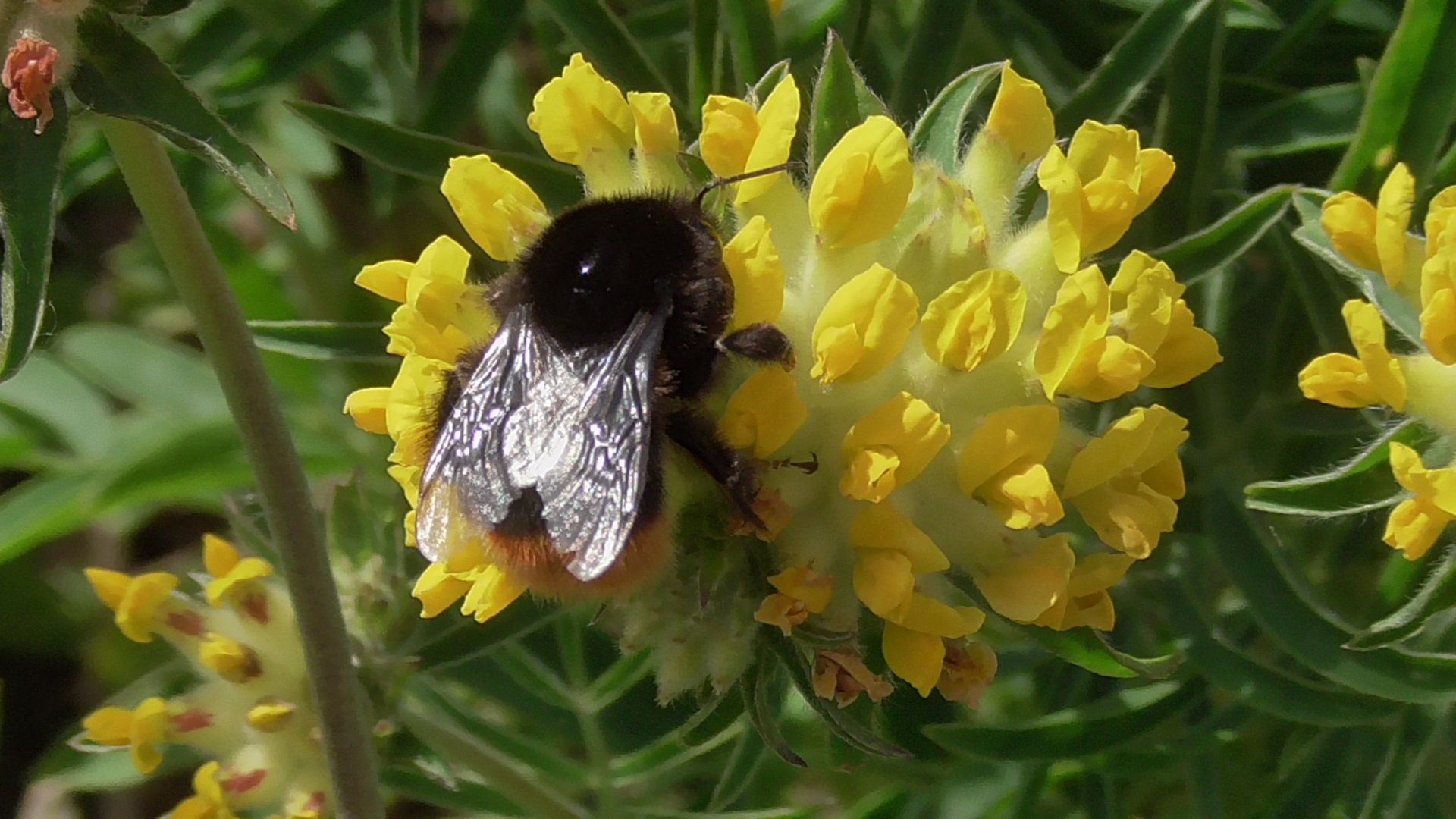
Bee on kidney vetch May 2026. I. Carroll
With plants came insects, and with insects came birds. Much of this diversity remains
undocumented – beetles, flies, moths, spiders and more await discovery – but their abundance is unmistakable. Butterflies, however, have been more closely observed, and the figures are striking. As plant diversity increased, so too did butterfly numbers. Over the past decade, Rattlechain has supported 27 of Britain’s 59 butterfly species – almost 46% of the national total – earning it quiet recognition as an urban refuge of considerable importance.
Beyond the boundaries of Rattlechain, however, the outlook for both plant and butterfly is far more troubling. Since the early 1980s, the distribution of Kidney Vetch across the UK has declined by approximately 43%. This steady erosion of habitat has placed Britain’s smallest blue’ butterfly firmly on the conservation priority list, as once-reliable sites disappear beneath development and changing land use.
Against this backdrop, Rattlechain’s value becomes unmistakably clear. It represents the only confirmed breeding site for the Small Blue butterfly Cupido minimus, within the innermost reaches of the West Midlands – the nearest alternative lying more than thirty miles away.
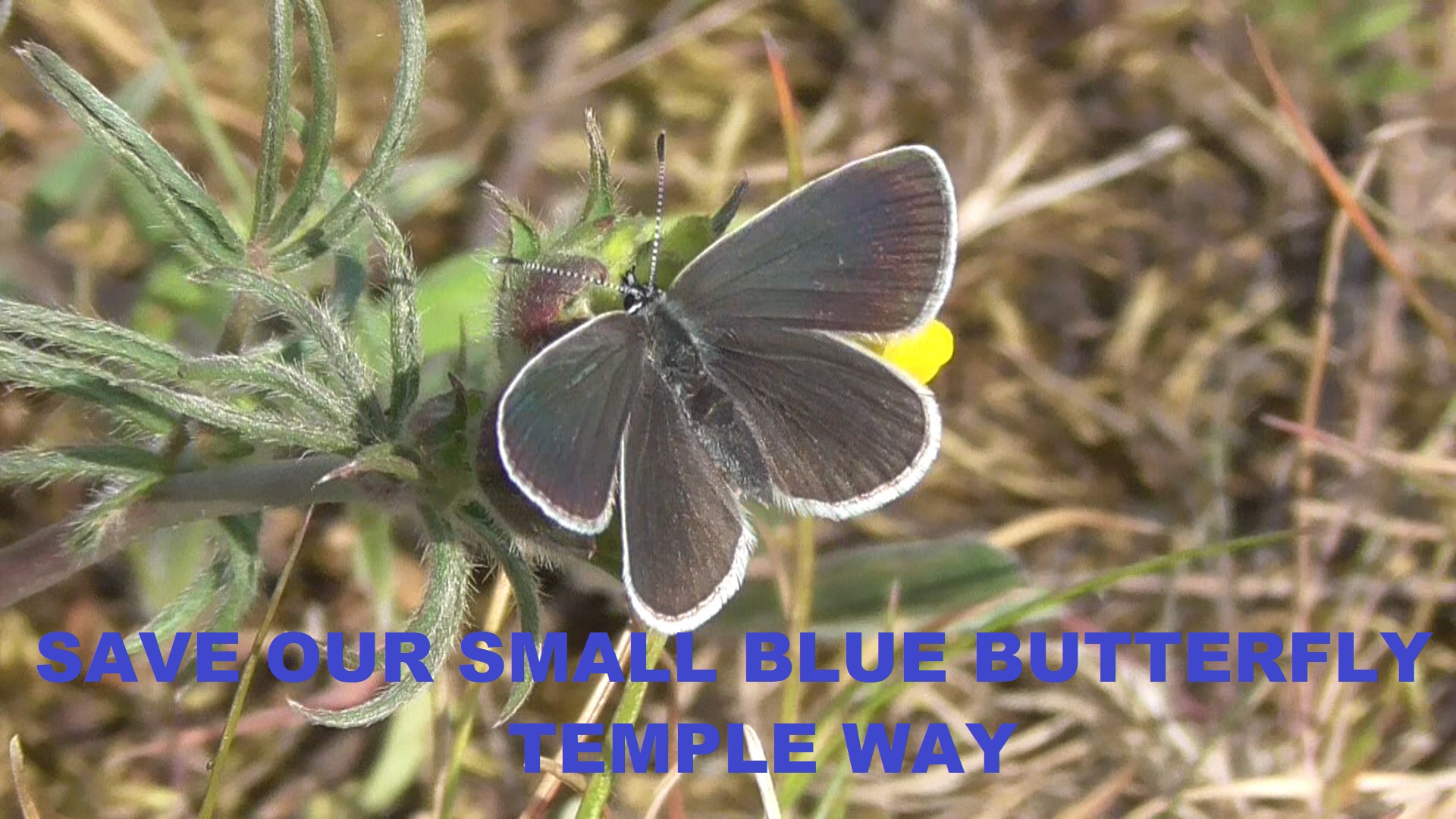
Small blue on kidney vetch. I Carroll
Here, an unassuming patch of undisturbed ground supports a species whose survival depends entirely on the presence of a single, increasingly rare plant. What persists does so not through careful design, but by chance – an accident of history and neglect. And for that very reason, its future now rests upon something altogether more deliberate: thoughtful, informed stewardship.
This was the situation until January 2025.
On a grey, fog-laden day, without warning or consultation, heavy machinery arrived. With no known conservation oversight, ecological surveys, or biodiversity records in place, bulldozers started to strip the surface of the site. Established trees and bushes were chainsawed and uprooted; the ground was aggressively scarified, removing much of the vegetation built up over two decades.
Within the space of a couple of weeks, a vital wildlife corridor – linking Sheepwash Nature
Reserve, beyond the canal to the north – appeared to have be lost.
Macdonald Close January 2025
At first glance, the destruction seemed absolute.
Yet nature, as ever, had other plans.
While the disturbance did eliminate many invasive species such as Buddleia and Sea Buckthorn, it also triggered an unexpected resurgence. From the newly exposed ground emerged thousands of Kidney Vetch plants – one of the rarer and declining species in the Black Country and the wider West Midlands. This modest plant is of profound importance, for it is the sole larval foodplant of the Small Blue butterfly, one of Britain’s rarest and most delicate species.
As far back as 2016, Small Blue butterflies had been observed at Rattlechain, particularly in the north-eastern section of the site. There, in a shallow depression known as The Hollow, Kidney Vetch flourished, painting the slopes yellow in summer. Over the following years, the plant steadily expanded, climbing the sides of the hollow and spreading towards the main entrance from Macdonald Close. The butterflies followed.
Initially confined to just a few areas, the Small Blue population began to disperse more widely by 2021.
By 2024, regular counts across the site ranged between 30 and 50 individuals – an extraordinary success story unfolding quietly amid the urban sprawl.
In June 2025, as vegetation tentatively began to recover, a visit was made to the site alongside Mike Williams from Butterfly Conservation (West Midlands). The aim was simple: to confirm whether the Small Blue had survived the devastation. What followed exceeded all expectations.
More than 20 individuals were recorded, and Mr Williams observed females actively laying eggs on the remaining, sparsely flowering, Kidney Vetch. Against all odds, the future looked promising.
Now, as the site enters a new year, Rattlechain is once again in recovery. Dormant seeds are germinating in profusion, vegetation is returning, and the landscape is healing. While a dramatic increase in Small Blue numbers is unlikely during the 2026 season, the outlook beyond is encouraging. Provided no further damaging intervention occurs, both Kidney Vetch and its remarkable butterfly are poised to expand significantly in 2027.
Rattlechain Tip stands as a quiet testament to nature’s resilience – a reminder that even the most unlikely places, given time and tolerance, can become sanctuaries of extraordinary life.
For the people who live alongside it, Rattlechain may appear unremarkable at first glance. Yet beneath its grasses and wildflowers lies a story of quiet significance – one that belongs as much to the Black Country as it does to the butterfly itself. As the site continues its slow recovery, it offers an opportunity: to recognise the extraordinary value of overlooked places and to ensure that this unique site for the Small Blue butterfly, within the very heart of the West Midlands, is allowed not merely to survive, but to endure.
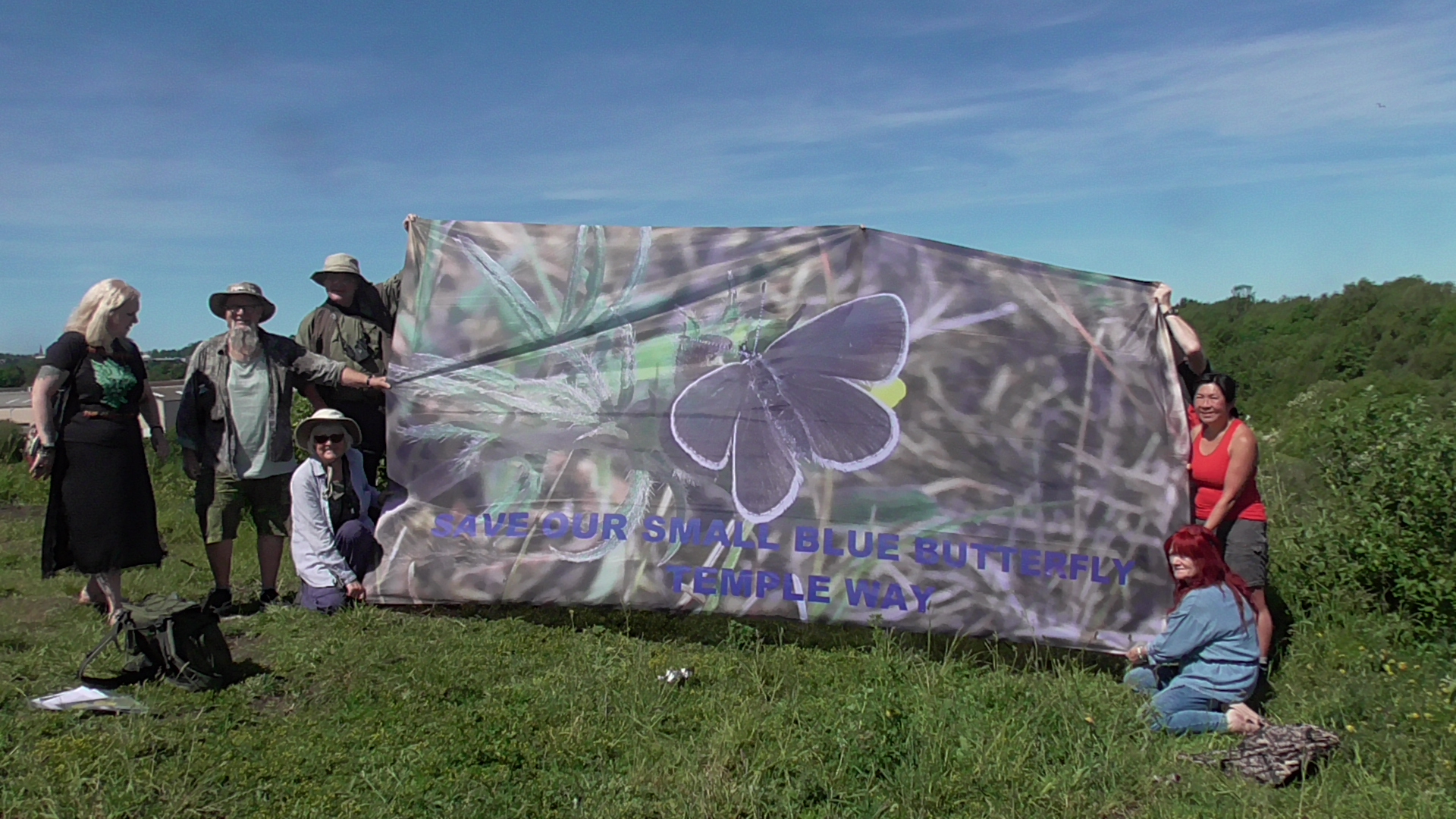
Butterfly and moth enthusiasts proclaim an important message