

As we take a break for a while with matters relating to current events in the area, it is worth a reminder of the different types of waste that Albright and Wilson, as well as other polluting chemical industrial outlets in the Oldbury vicinity pumped out via their manufacturing folly. Much of this was dutifully removed by “people of the road” and often “people of the boat” in Rattlechain lagoon waste tipping terms.
Chemical waste was everywhere, but “scrap machinery” and pipework was another waste material that was lanced from Trinity Street when it had outlived its purpose. That contaminated material also had significant consequences in how it was dealt with, or not as this case from the 15th November 1962 Birmingham Daily Post reveals.
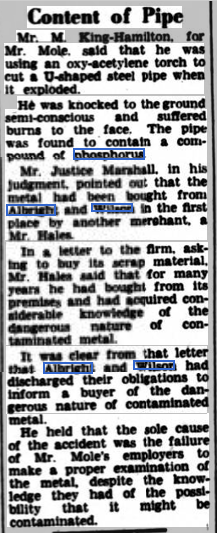
AW had flogged off scrap to local tatters, but is was contaminated with their deadly chemical phosphorus waste. Mr Mole had been disposing of said steel pipework when it exploded in his face causing burns and injuries.
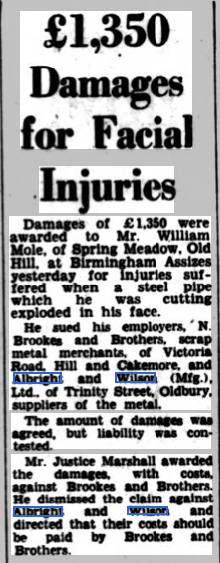
AW contested the claim against them and were not found liable by the judge, and yet the question remains as to how and why they should get away with disposing of material such as this with such gay abandon and the lack of regulations in them being able to do this without censure. Mr Mole received his cut, but AW found dumps like Rattlechain and the Gower Tip easier avenues to dump “scrap material” instead. Lying beneath the water and soil are large amounts of barrels, pipework and scrap machinery all contaminated with the same material that caused the burns here.
Rattlechain ESID report (Conceptual model Environmental setting and installation design report) URS
At page 3 paragraph 1 1.2 Introduction “Installation Details.”
“Historically a variety of waste types were deposited, including chemical drums containing phosphatic muds. It is thought that some drums containing wastes with up to 1% phosphorus, may have been dumped annually until 1995. The historical disposal of solid material such as chemical waste and scrap machinery has also been reported. URS 2002.”